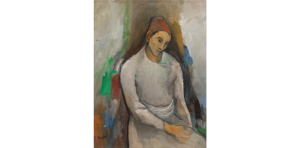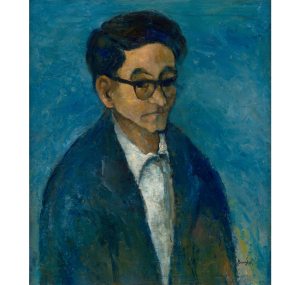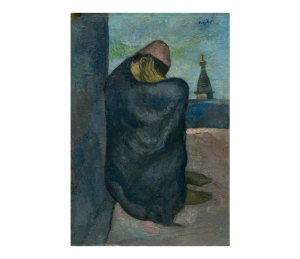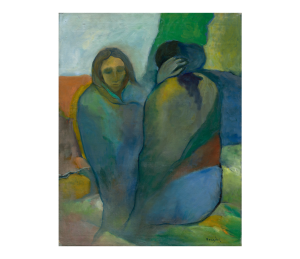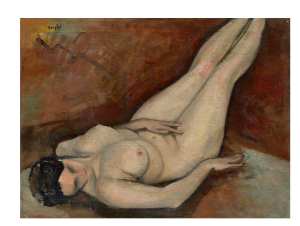
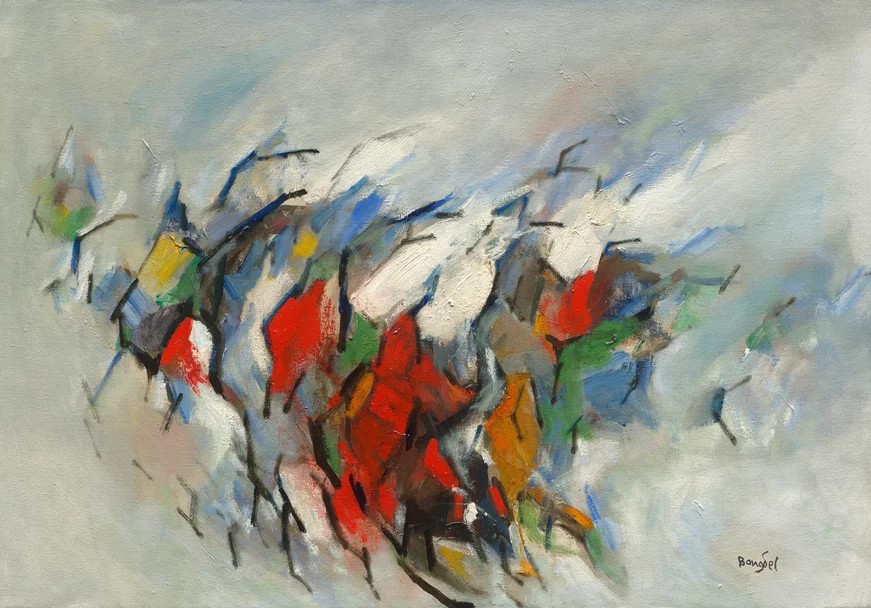
Tansbao Gallery is honored to present a solo exhibition of Lain Singh Bangdel (1919–2002), widely revered as the “Father of Modern Art in Nepal,” at Frieze Seoul 2026, marking the artist’s first presentation in Seoul following the gallery’s presentation at Art Basel Hong Kong earlier this year. Selected for Spotlight, a curated section making its Frieze Seoul debut this year, the presentation is part of a program curated by Wonseok Koh, Director of the Line Cultural Foundation.
Dedicated to solo presentations of 20th-century artists, Spotlight foregrounds overlooked figures, evolving practices, and significant early works, reflecting a growing interest in art-historical narratives beyond dominant Western canons.
Bringing together works created from the 1960s through the 1990s, the exhibition traces how Bangdel transformed memories of cities, mountains, and the natural landscape into an independent and deeply expressive modernist language.
Born into a Nepali immigrant family in Darjeeling, India, Bangdel pursued further studies in London and Paris in the 1950s, where he encountered modernist movements including Cubism, Fauvism, and abstraction. After returning to Nepal in 1960, he increasingly brought these international modernist experiences into dialogue with his own cultural memory, developing an artistic language that crossed geographical and cultural boundaries.
For Bangdel, abstraction was not a departure from the visible world, but a means of transforming landscape, memory, and perception into color, form, and movement.
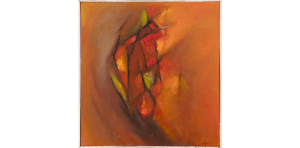
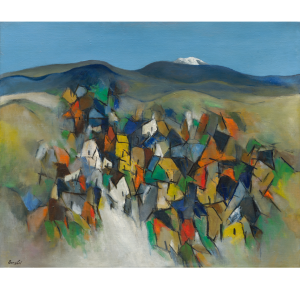
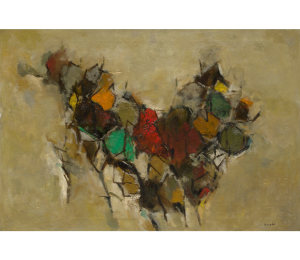
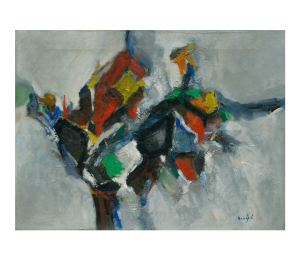
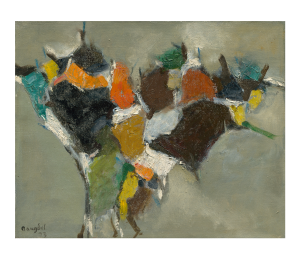
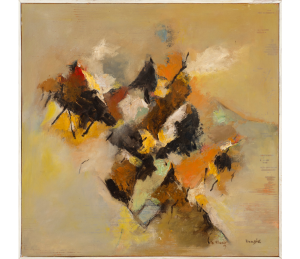
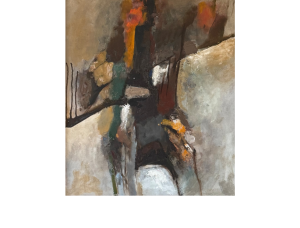
Old City (1961) marks an important moment in Bangdel’s movement toward abstraction. Fractured forms, intersecting lines, and vibrant fields of color cluster across the composition, suggesting buildings, streets, and the compressed energy of urban life. Moving between recognizable structure and abstraction, the work reveals Bangdel’s growing engagement with an increasingly independent abstract vocabulary.
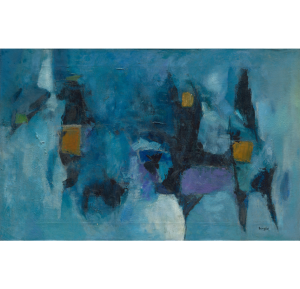
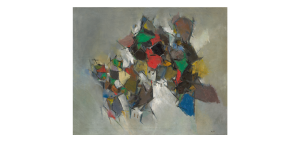
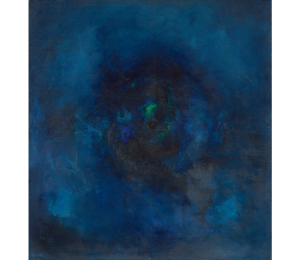
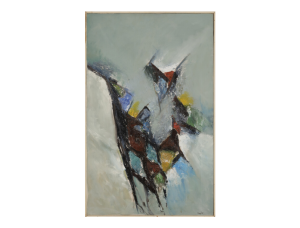
By the 1970s, Bangdel’s abstract language had reached a new level of maturity. In Mountain and Valley (1973), sweeping gestures and fractured forms transform mountains and valleys into an inner landscape charged with tension and movement. Rather than depicting a specific site, Bangdel evokes the landscape as something lived, remembered, and internalized.
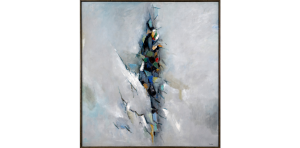
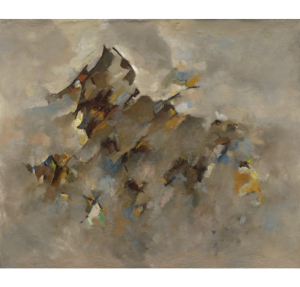
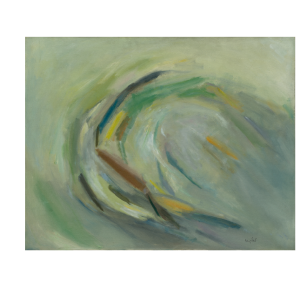
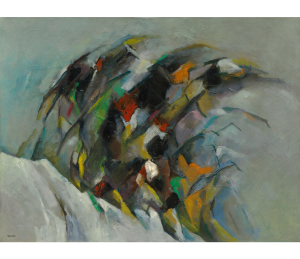
Winter Storm (1974) employs strongly contrasting colors, fragmented forms, and rapid brushstrokes to evoke the movement of fierce winds, swirling snow, and shifting air. Transforming a winter storm into a restless, austere, and elemental experience of nature, the work demonstrates Bangdel’s mature abstract language and his remarkable ability to translate the natural world into an expressive emotional experience.
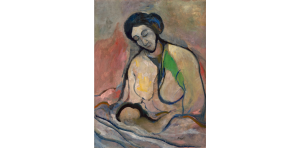
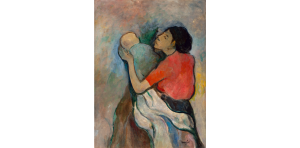
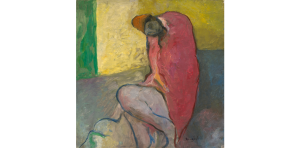
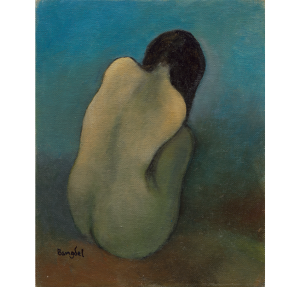
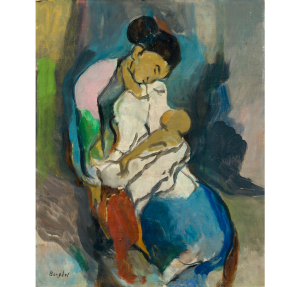
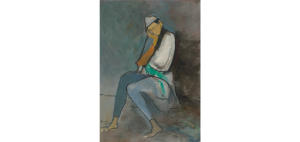
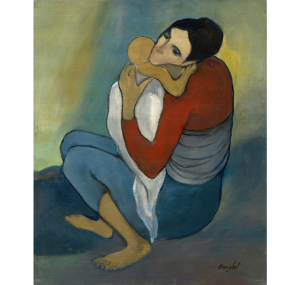
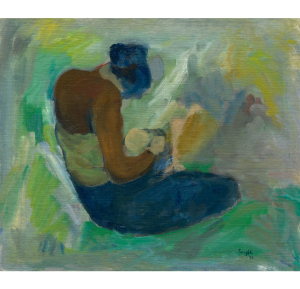
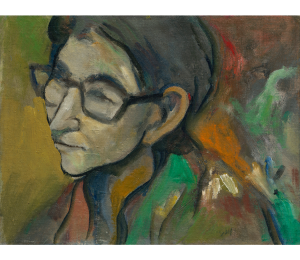
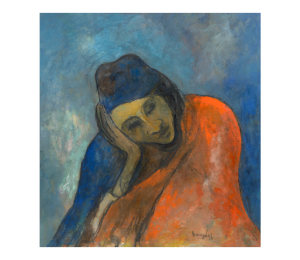
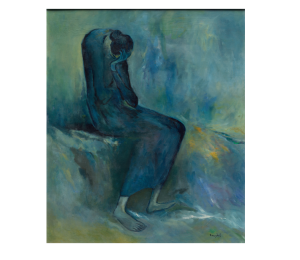
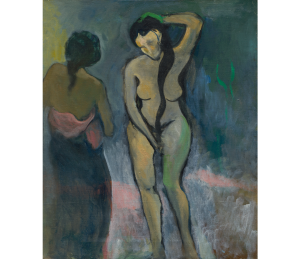
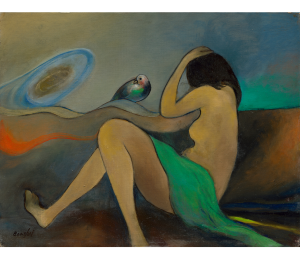
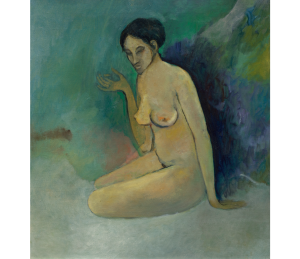
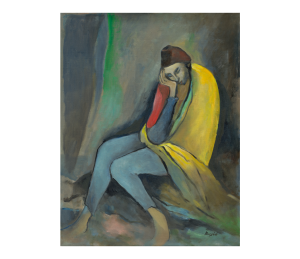
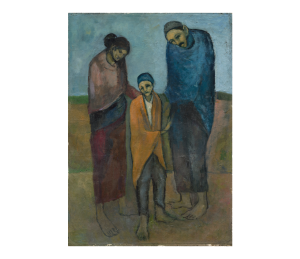
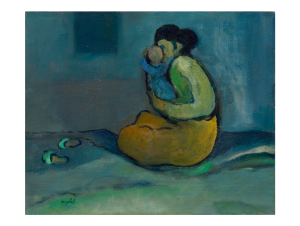
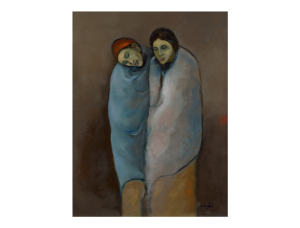
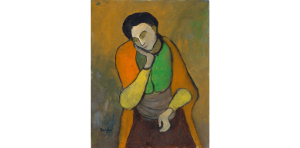
Alongside these abstract landscapes, the presentation also includes Maternity (1963) and Mother and Child (1964), revealing a more intimate and deeply emotional dimension of Bangdel’s practice. Bangdel lost his mother when he was only one and a half years old, an experience that made the mother-and-child motif a subject to which he returned throughout his life. Executed with lyrical lines and a luminous palette, Maternity conveys tenderness, devotion, and emotional intimacy.
For Bangdel, maternity embodied both a profound personal longing for maternal love and a universal symbol of love itself.
At first glance, the mountain and the mother-and-child motif may appear to occupy opposite ends of Bangdel’s practice: one gestures toward nature and spirituality, while the other turns inward toward intimate human emotion. Yet both are rooted in memory and lived experience, revealing a modernist language that is at once deeply grounded in a sense of place and expansive in its international outlook.
Bangdel was also a pivotal force in shaping the institutional and cultural development of modern art in Nepal. His 1962 solo exhibition in Kathmandu is widely regarded as a landmark in the history of Nepali modern art, after which he remained deeply engaged in art education and the development of cultural institutions.
Today, his works are held in major public collections including the Fukuoka Asian Art Museum, the Newark Museum of Art, the Jordan Schnitzer Museum of Art at the University of Oregon, the United Nations Headquarters in New York, and the National Art Museum of Nepal, among others.
Following its presentation of Bangdel at Art Basel Hong Kong, Tansbao Gallery returns to his work at Frieze Seoul 2026, bringing his mature abstractions into dialogue with his figurative works.
From cities, mountains, and elemental storms to the profound intimacy of the mother-and-child relationship, the presentation reveals how this pioneer of Nepali modern art transformed personal experience and memories of place into an artistic language of universal resonance, further affirming his significant place within the history of global modernism.
Booth|S08
Address| Halls C and D on Level 3, COEX, 513 Yeongdong-daero, Gangnam-gu, Seoul 06164, Republic of Korea
Participating Artist| Lain Singh Bangdel
Preview
September 2: 11:00 – 19:00
September 3: 11:00 – 15:00
Public Days
September 3: 15:00 – 19:00
September 4 – 5: 11:00 – 19:00