Lot details
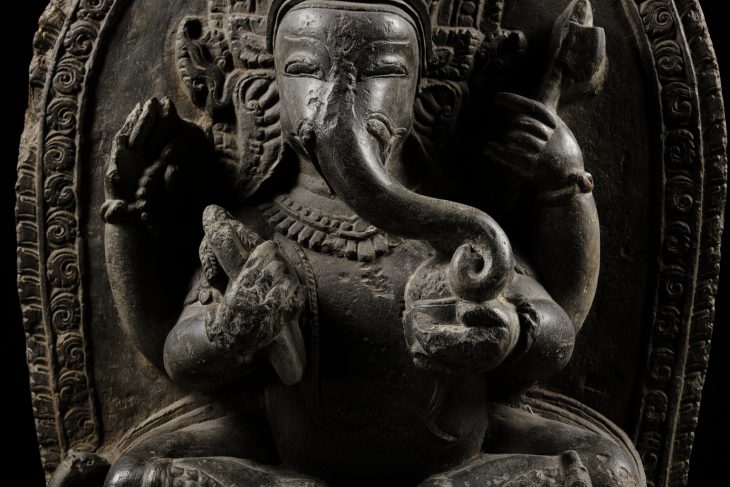
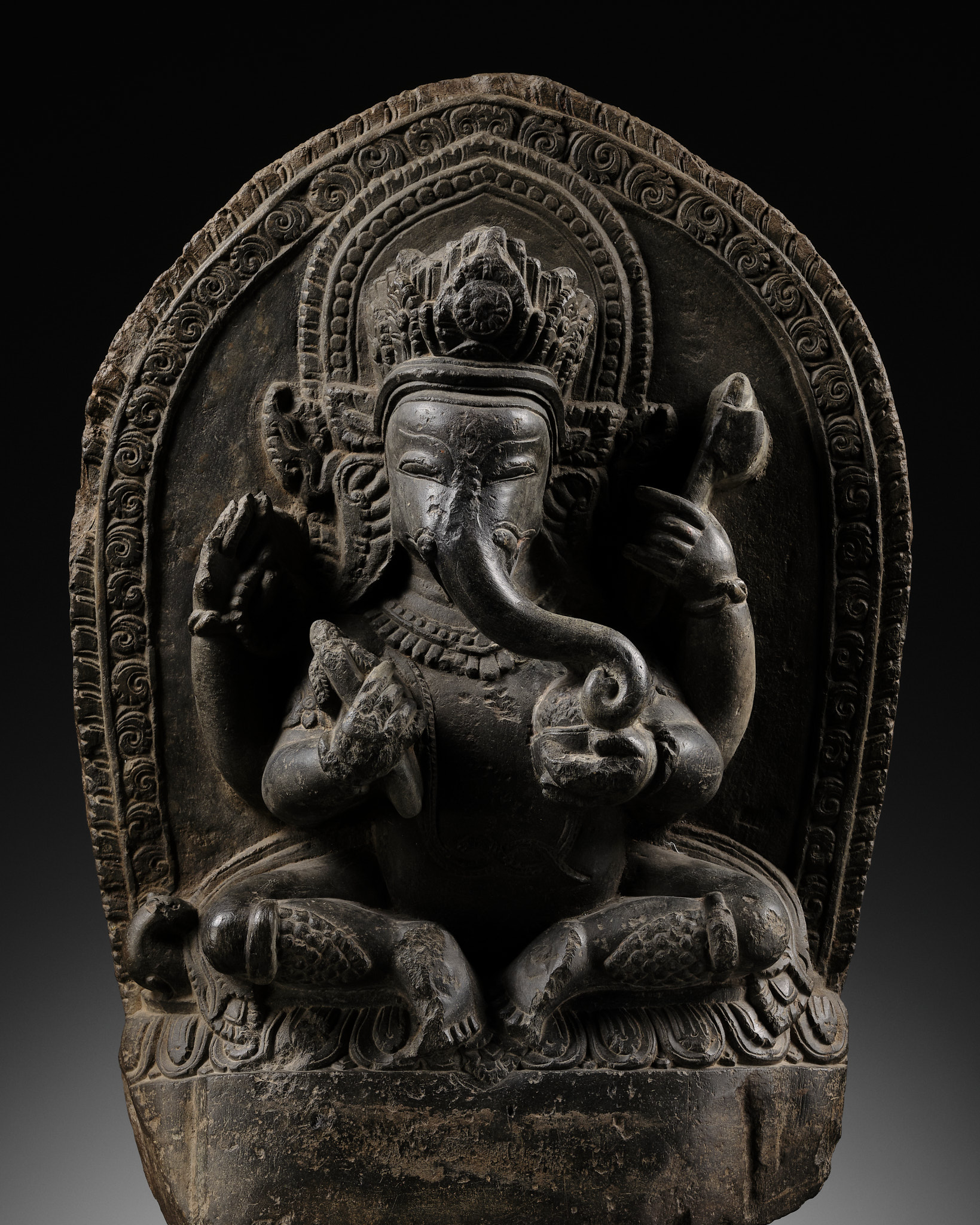
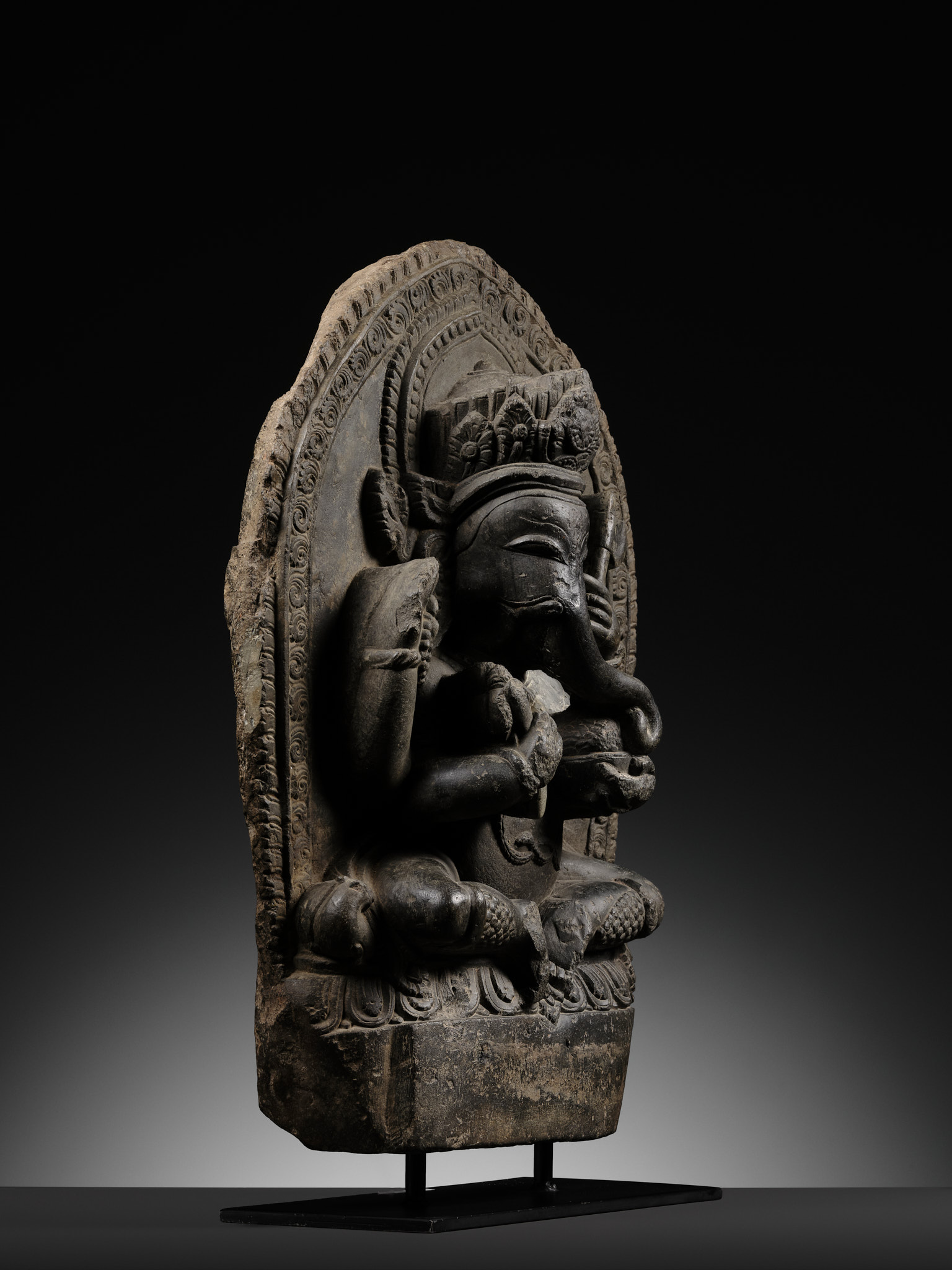
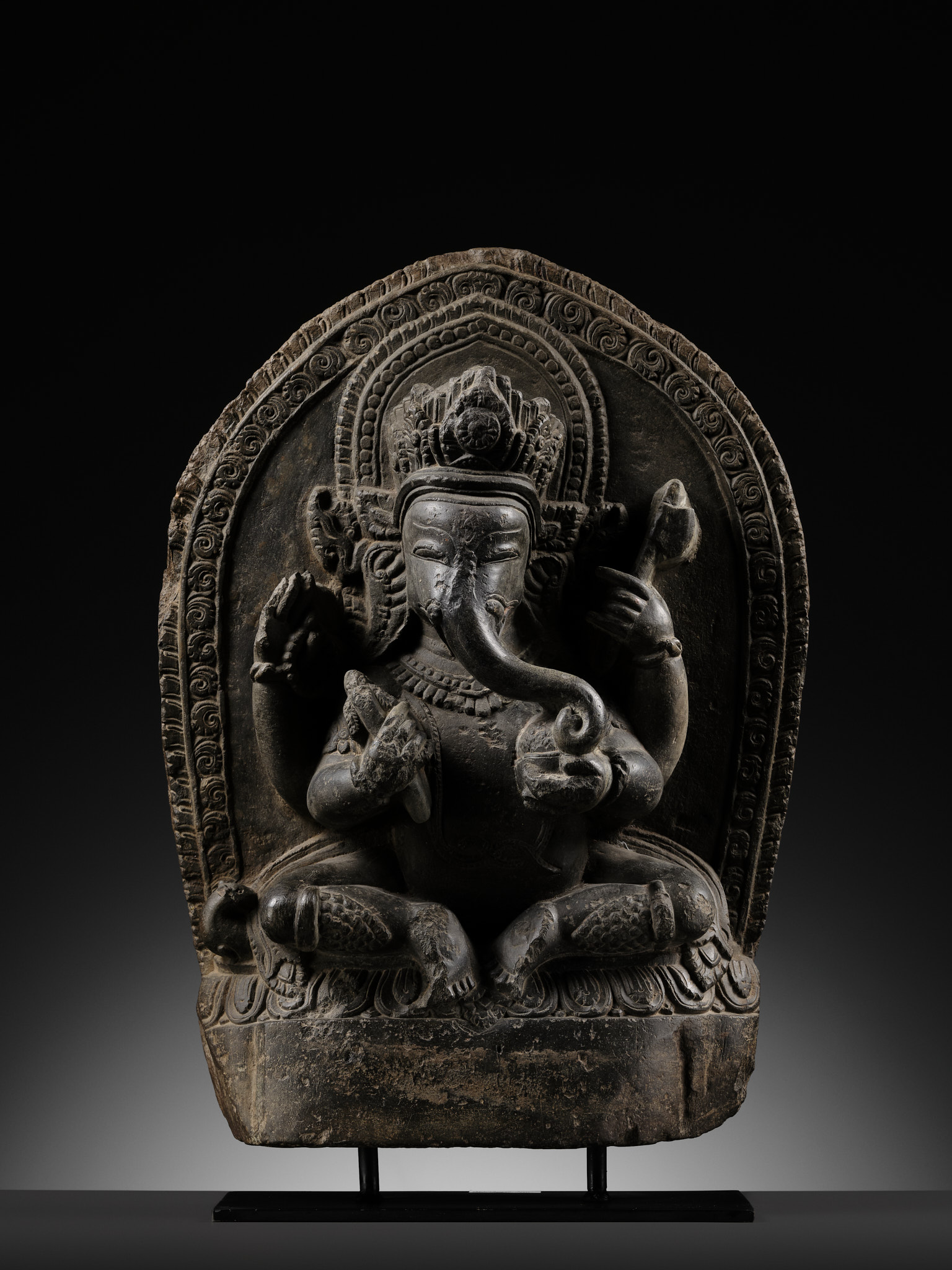
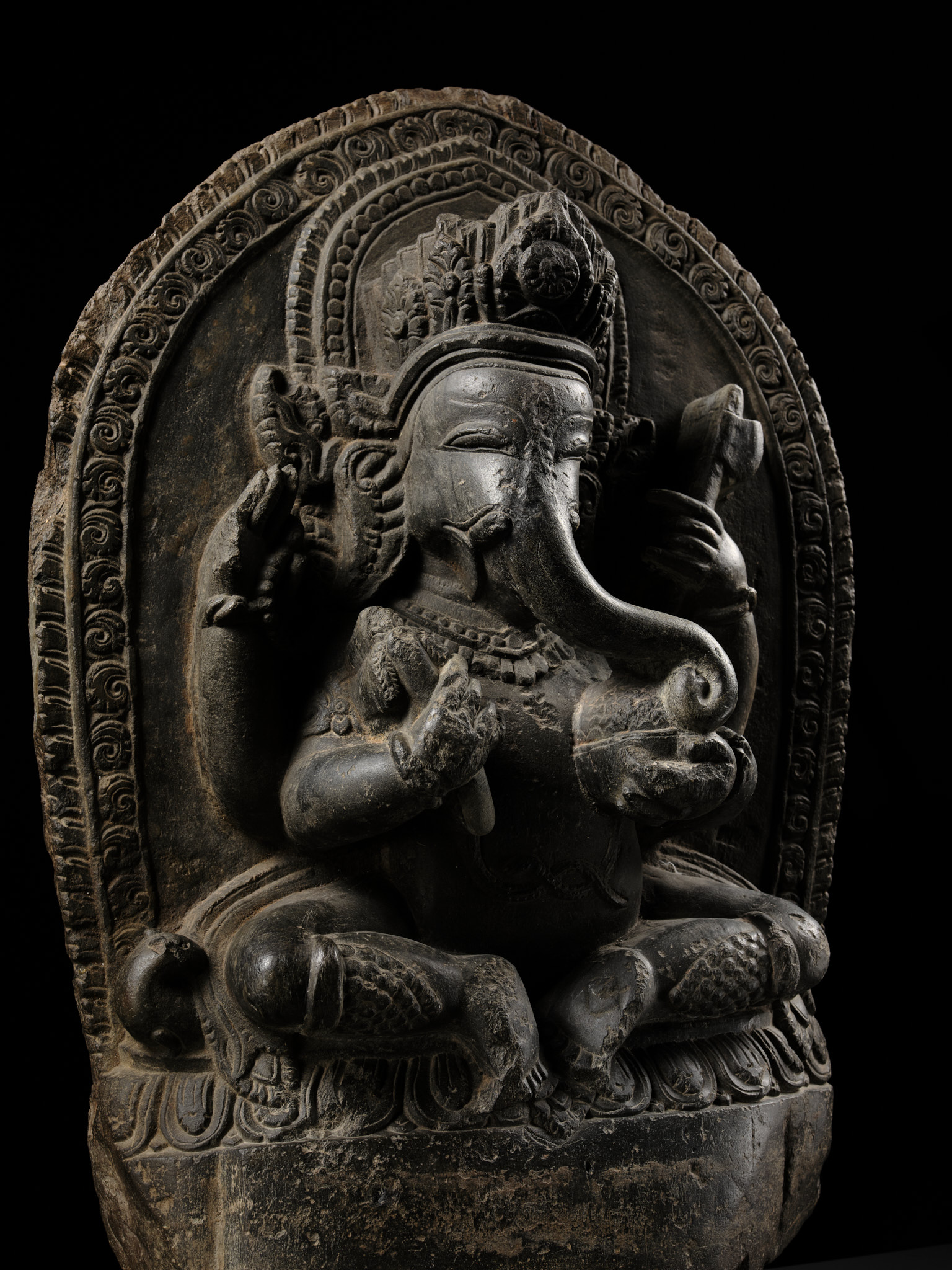
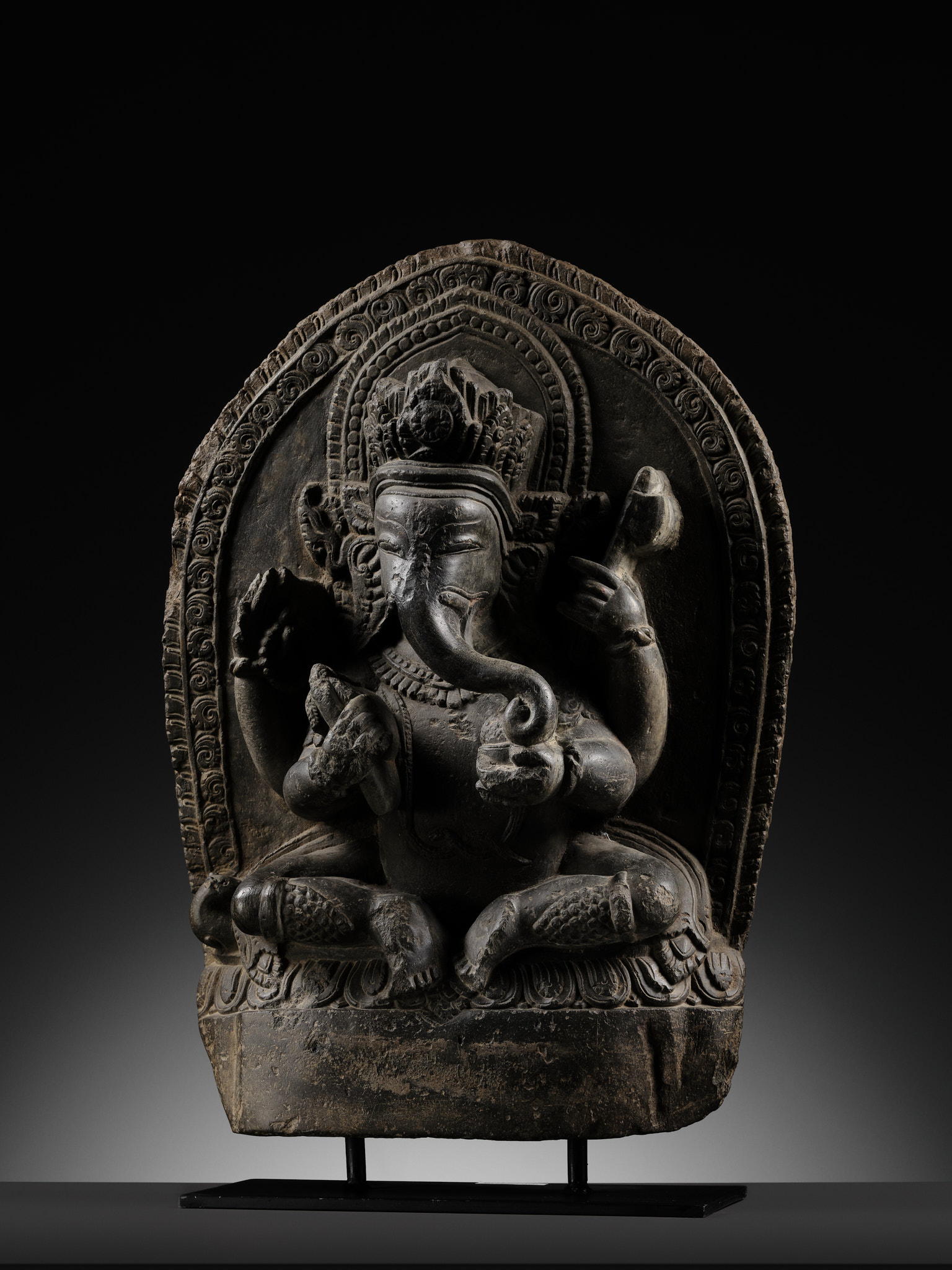
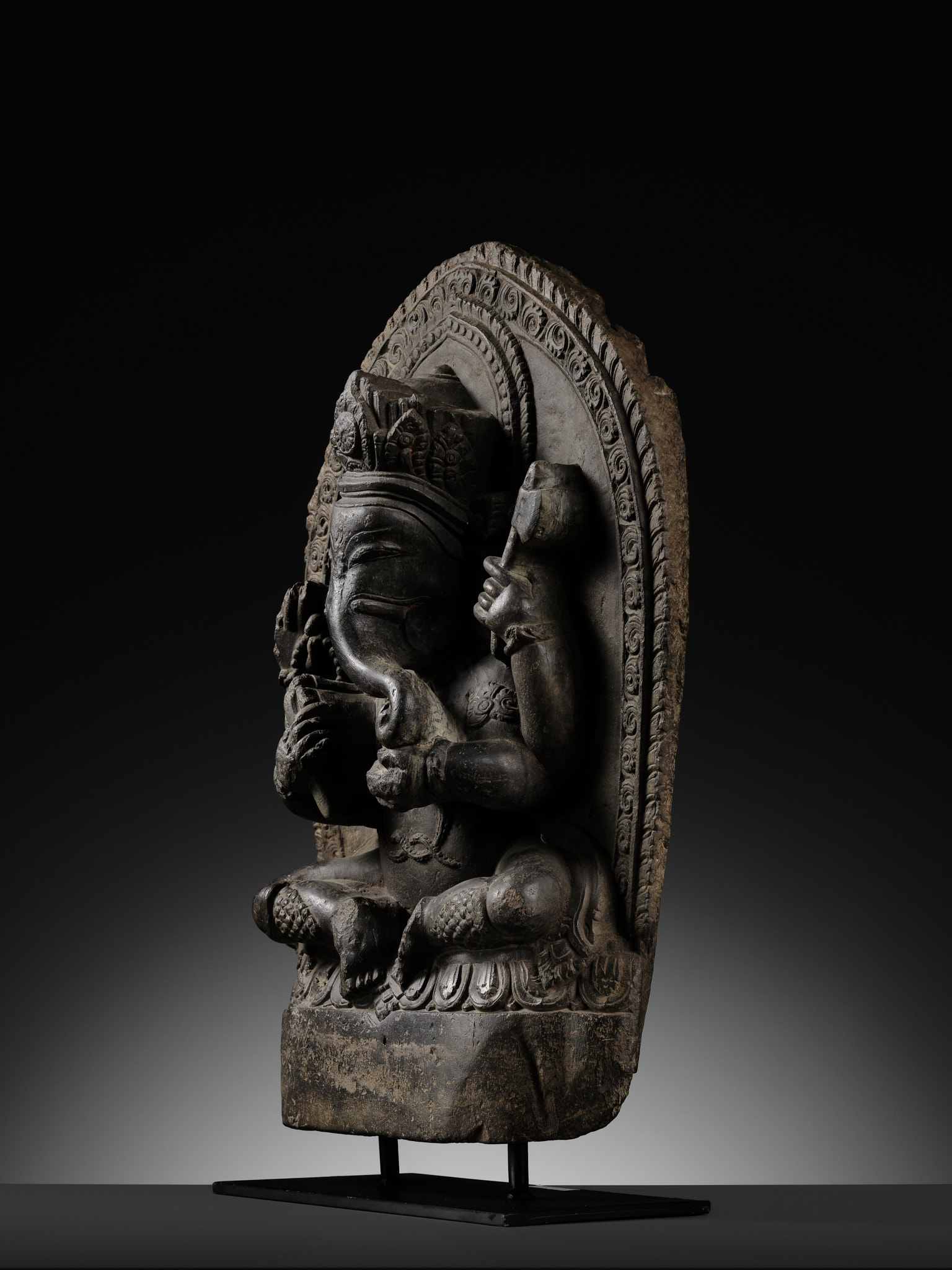
Finely carved seated in lalitasana on a lotus base, set against an aureole with a flaming border. In his four hands, he holds a mala, axe, bowl of sweets, and his broken tusk. His face, characterized by heavy-lidded eyes, is framed by wide ears and a detailed foliate headdress.
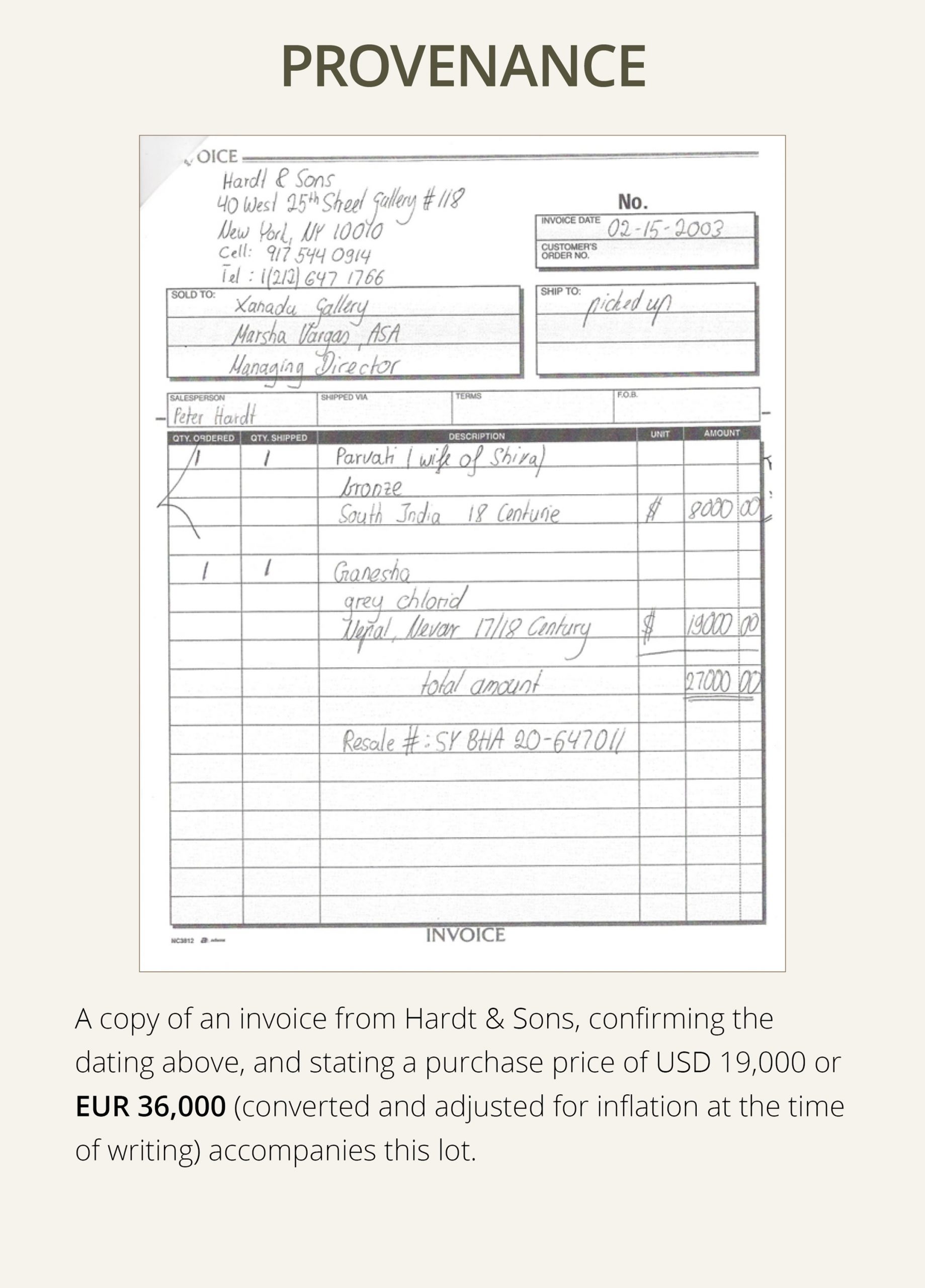
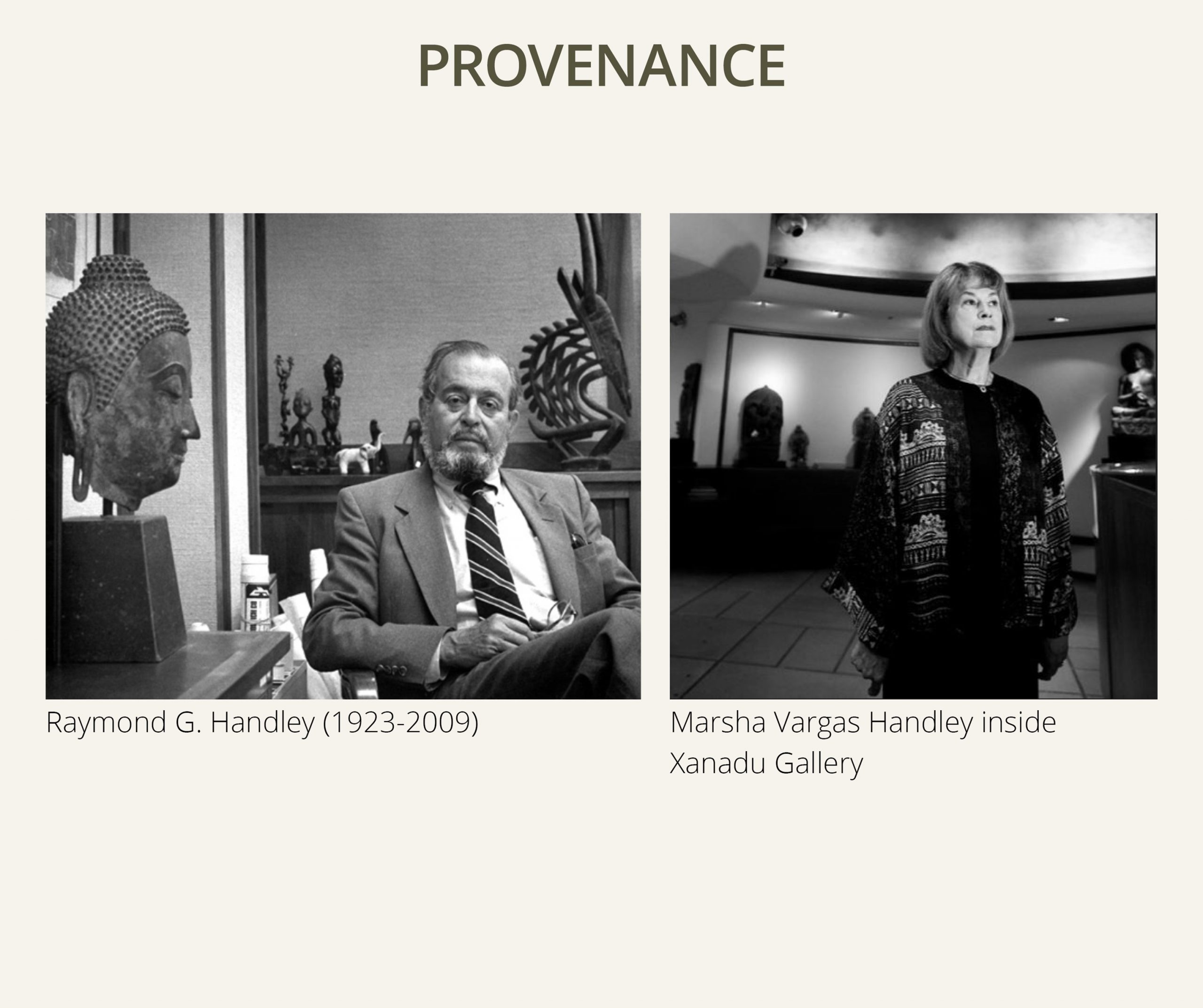
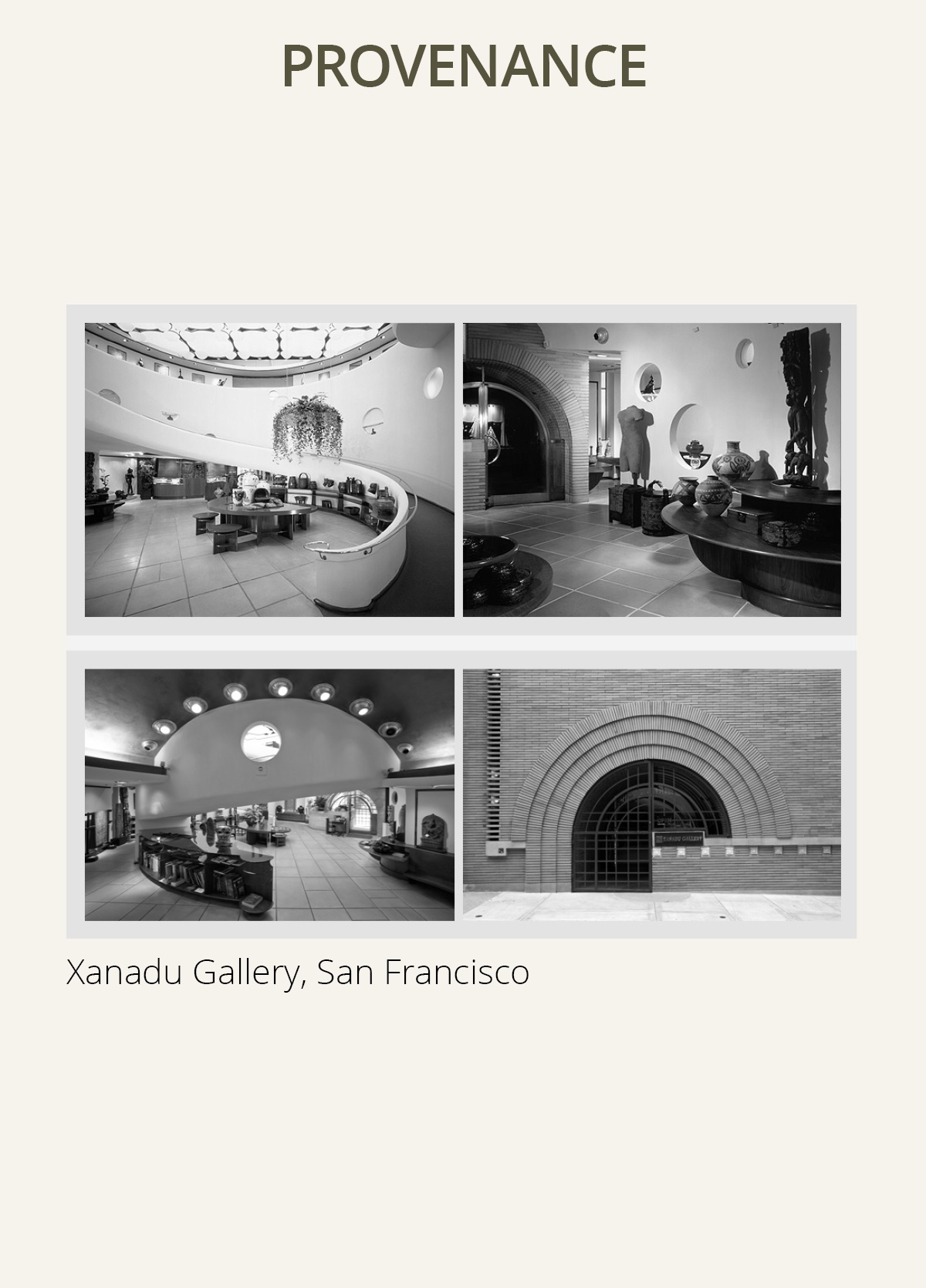
Provenance: Hardt & Sons, New York, United States, 15 February 2003. Collection of Raymond Handley, Los Altos Hills, California, acquired from the above and thence by descent to his wife Marsha Vargas Handley. A copy of an invoice from Hardt & Sons, confirming the dating above, and stating a purchase price of USD 19,000 or EUR 36,000 (converted and adjusted for inflation at the time of writing) accompanies this lot. Raymond G. Handley (1923-2009) partnered with Ray Renault in the 1950s to co-found one of California’s oldest and most successful real estate development firms. They were pioneers in shaping the early landscape of Silicon Valley, developing buildings for major tech innovators such as Intel and Raytheon, laying the groundwork for the region’s transformation into a global technology hub. Raymond Handley was a keen collector of art who traveled extensively, including the most remote parts of Papua New Guinea and Africa. In Mali, where his brother served as the Ambassador of the United States, he drilled more than fifty water wells for Dogon villages. His passion led him to establish Folk Art International/Xanadu Tribal Arts, an ethnographic art business which developed into the Xanadu Gallery in the late 1990s, located in the historic Frank Lloyd Wright building off Union Square, and continued by his widow Marsha Vargas Handley until her retirement in 2015. Having opened her first gallery in the Bay Area in 1973, she is an important figure in the Asian art world in her own right, serving as the president of the International Netsuke Society for over 16 years.
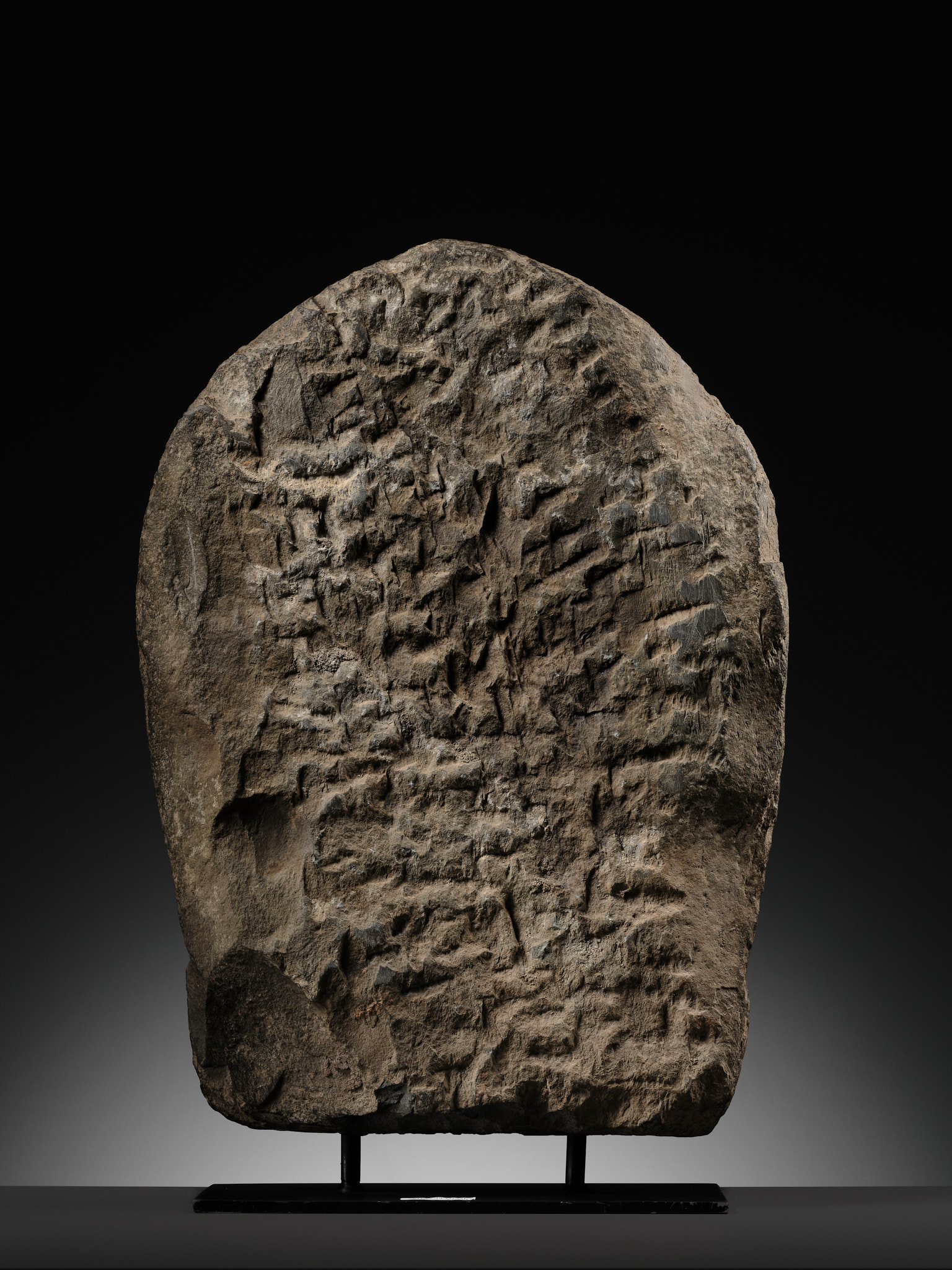
Condition: Overall good condition with expected wear, small nicks, light scratches, minor losses, some with associated old repairs and small fills, signs of weathering, encrustations, remnants of pigment.
Weight: 36.7 kg (incl. stand)
Dimensions: Height 54.5 cm (excl. stand), 59.5 cm (incl. stand)
With an associated metal stand. (2)
In Nepal, Ganesha is revered by both the Hindu and Buddhist communities. In Buddhist temples, his image is often placed at the entrance, along with the great protector Mahakala.
Ganesha is venerated as the remover of obstacles, the god of new beginnings, and the patron of arts and sciences, symbolizing the harmonious balance between the spiritual and material worlds. His image is often placed at the entrances of homes and businesses to attract prosperity, protection, and good fortune. The mala beads represent the path to wisdom and self-realization, guiding devotees toward spiritual enlightenment. The axe symbolizes the divine power to cut through obstacles that impede spiritual growth and development. The bowl of sweets is a symbol of the rewards earned through spiritual efforts, representing the fulfillment of desires and the blessings of abundance. The broken tusk embodies knowledge and wisdom, which are attained through sacrifice and dedication.
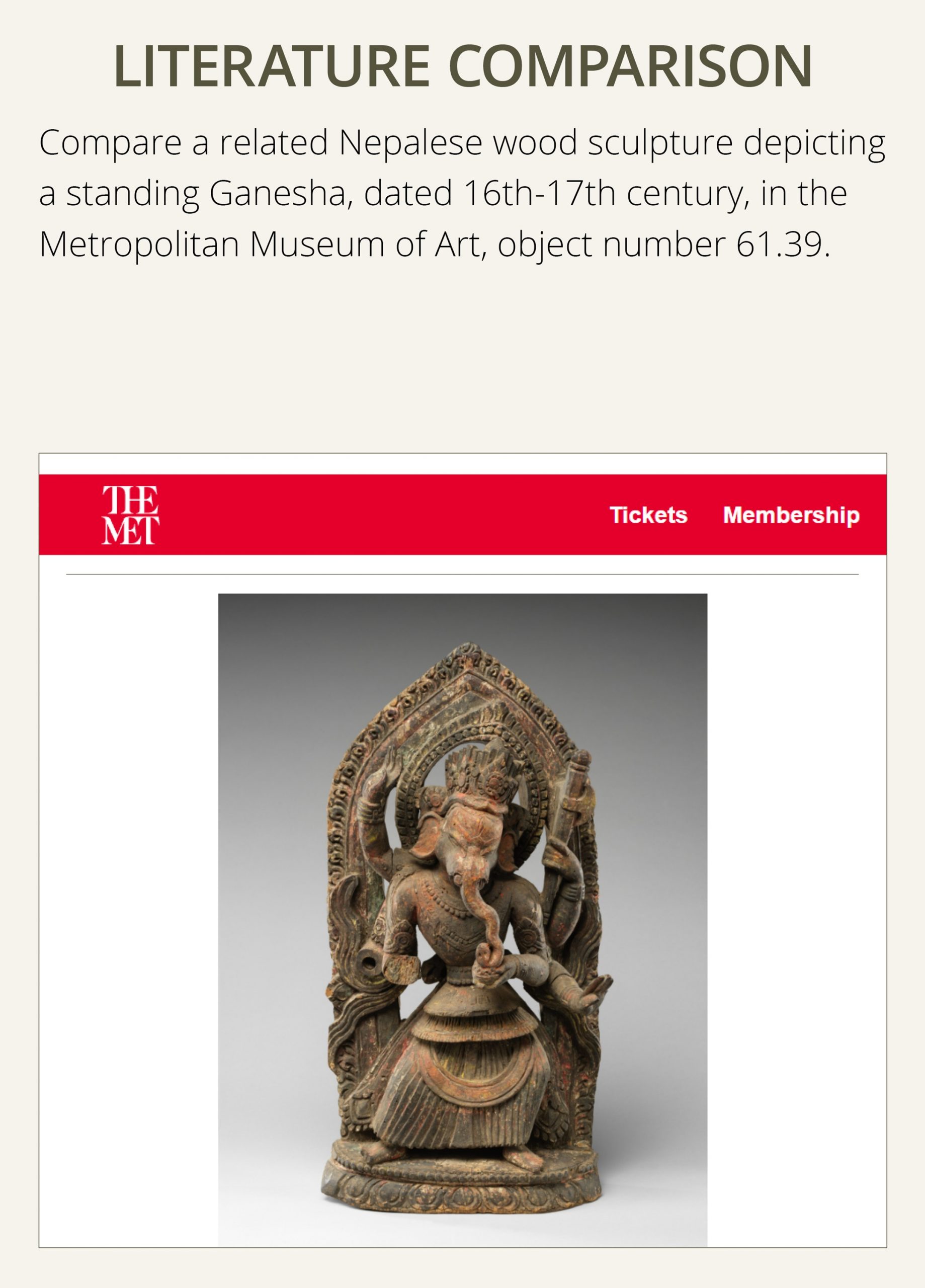
Literature comparison:
Compare a related Nepalese wood sculpture depicting a standing Ganesha, dated 16th-17th century, in the Metropolitan Museum of Art, object number 61.39.
The Image Was Earlier Published By Lost Arts of Nepal on 22 October 2021, as Located in the Collection of Xanadu Gallery, USA.
Details
- Title : A BLACK STONE STELE OF GANESHA
- Year : 17TH-18TH CENTURY
- Classification : Sculpture
- Medium : Black stone
- Dimension : Weight: 36.7 kg (incl. stand), Dimensions: Height 54.5 cm (excl. stand), 59.5 cm (incl. stand)
- Accession No : Lot 311 - FAS0426
- Collection : Zacke
- Acquisition Method : Actioned
- Status : Buy now for €11,440.00 I Until 31st Dec, 2026
- In situ identified- Stolen from the site : Bagh Bhairava temple complex, Kirtipur
- Pubication : Inventory of Stone Sculptures of the Kathmandu Valley - Lain Singh Bangdel
- :