
Lot details
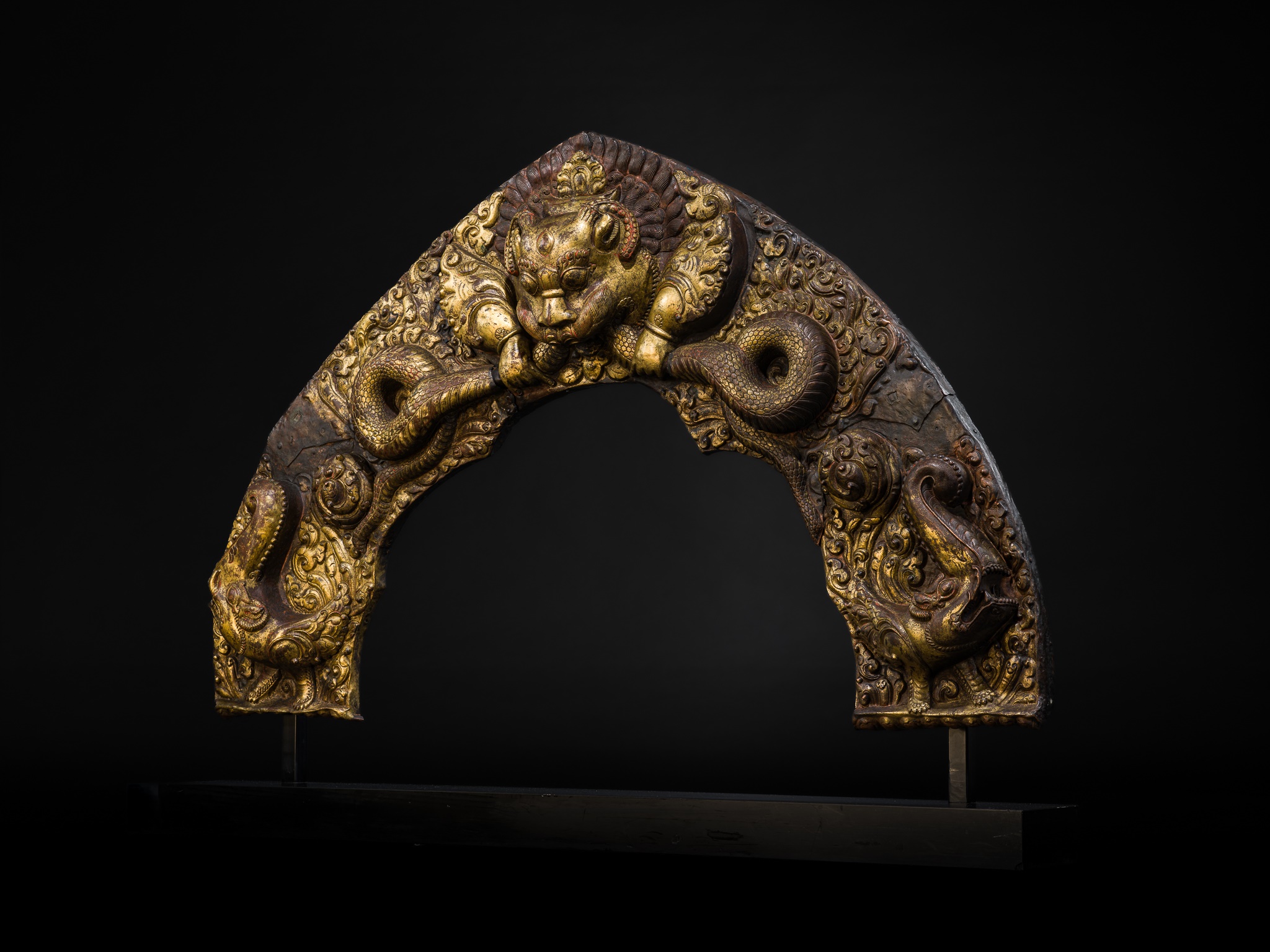
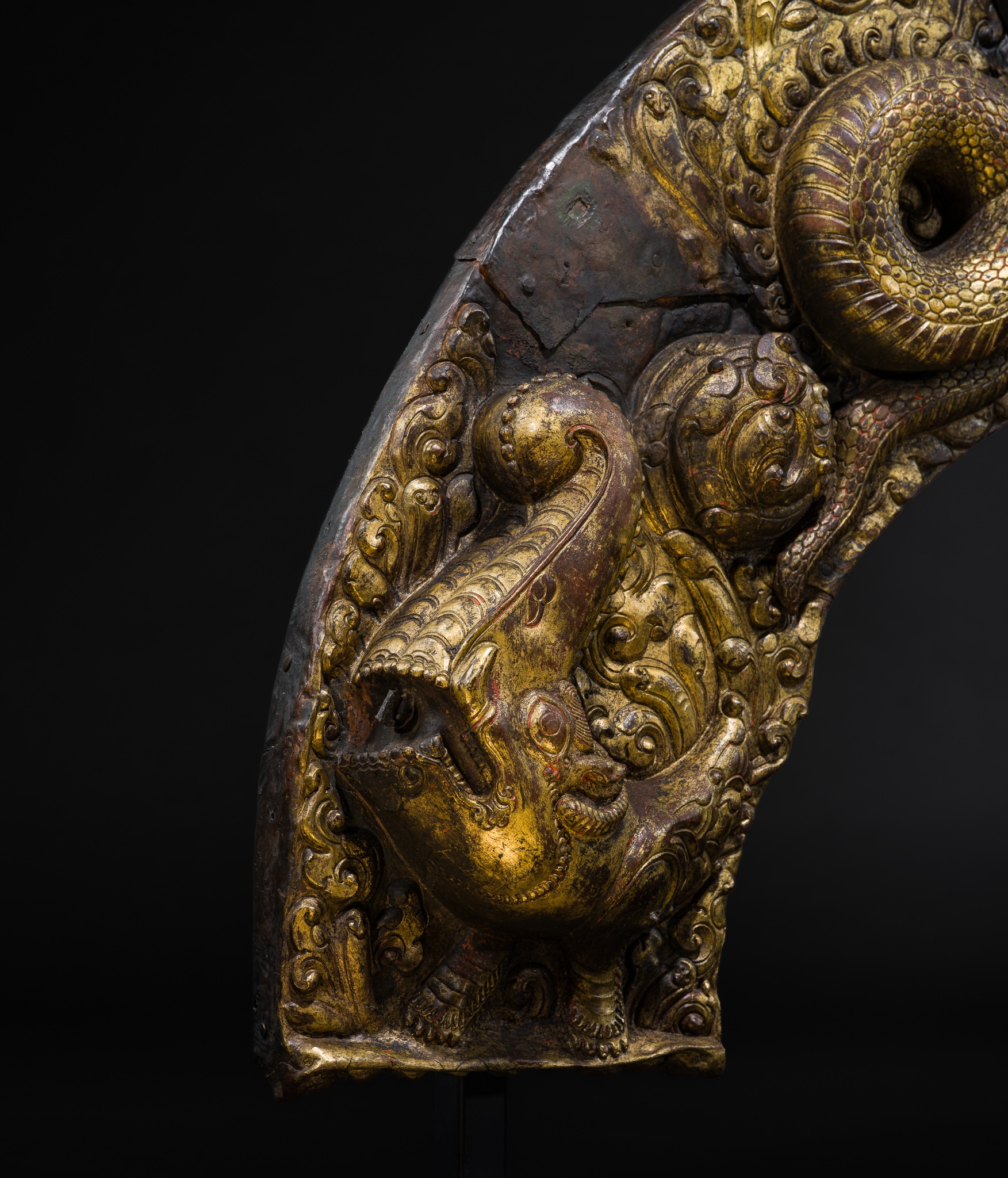
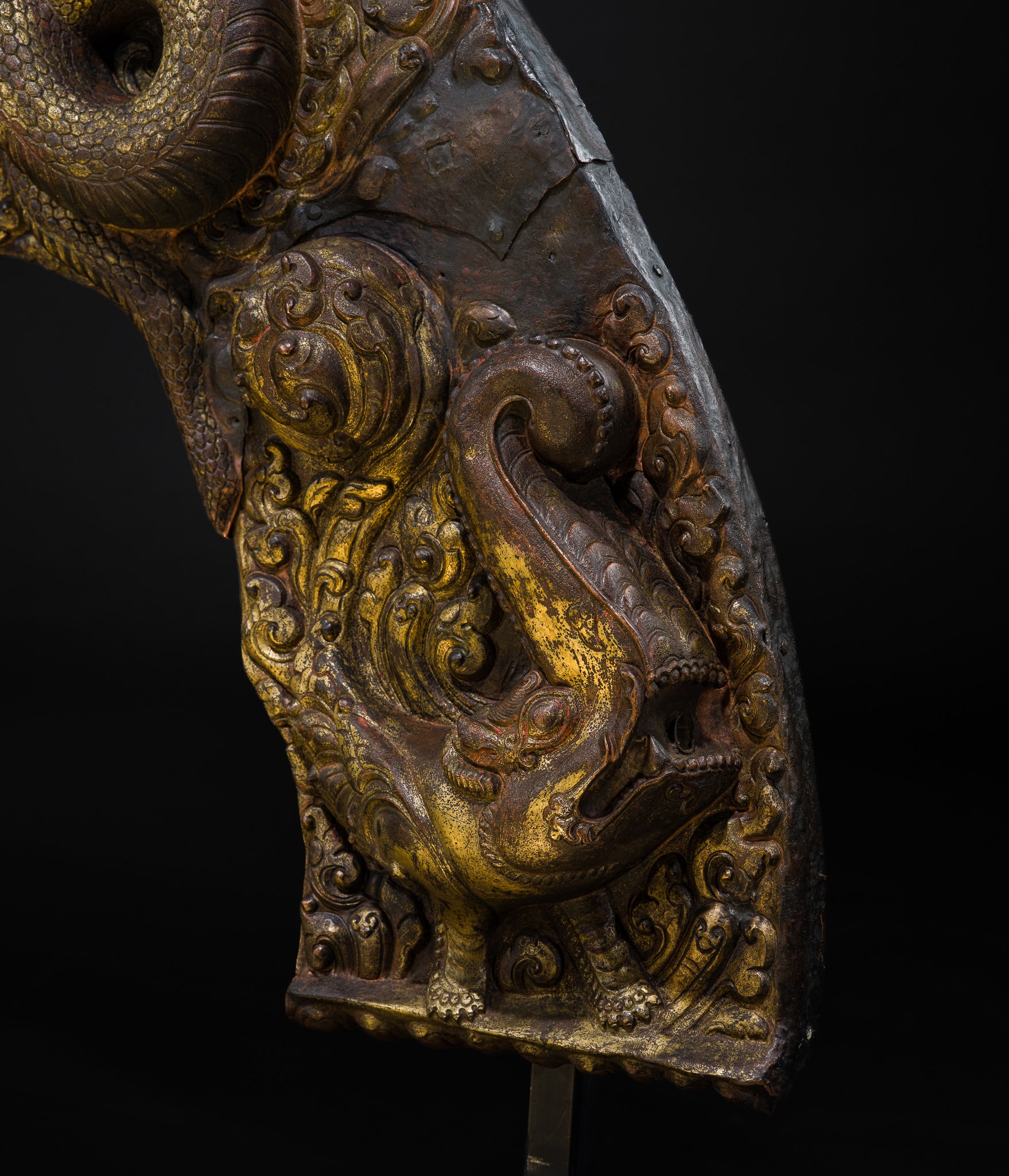
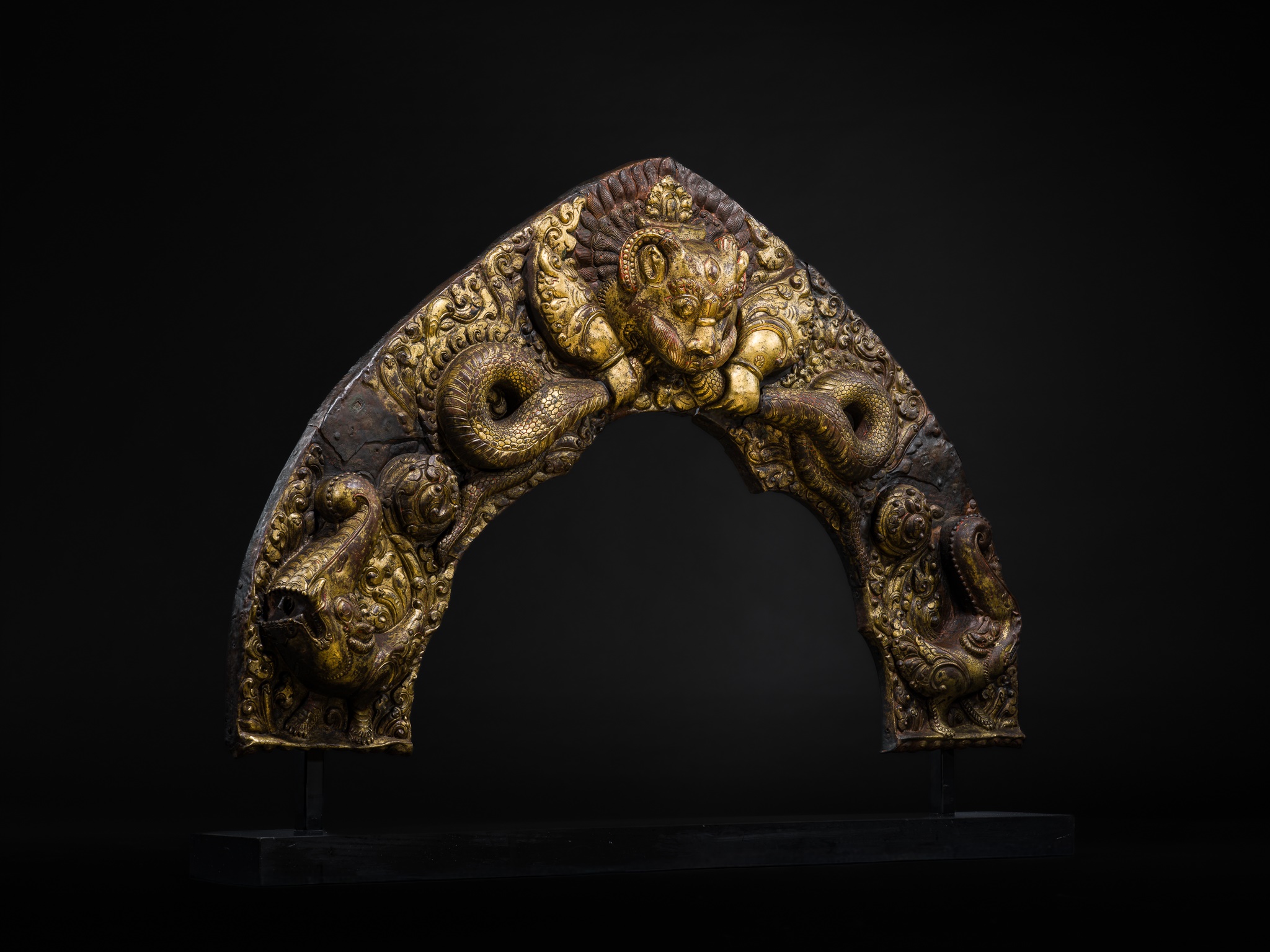
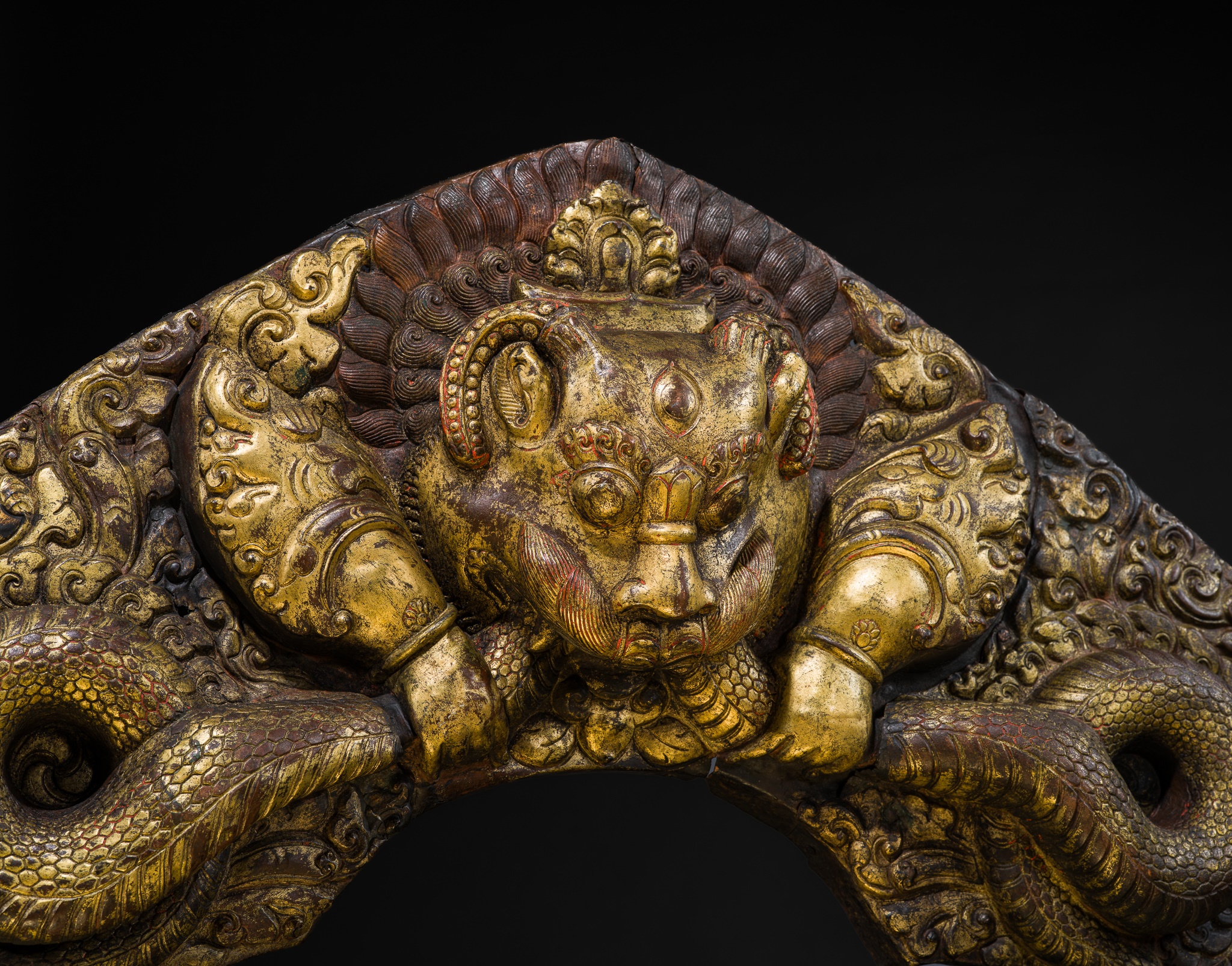
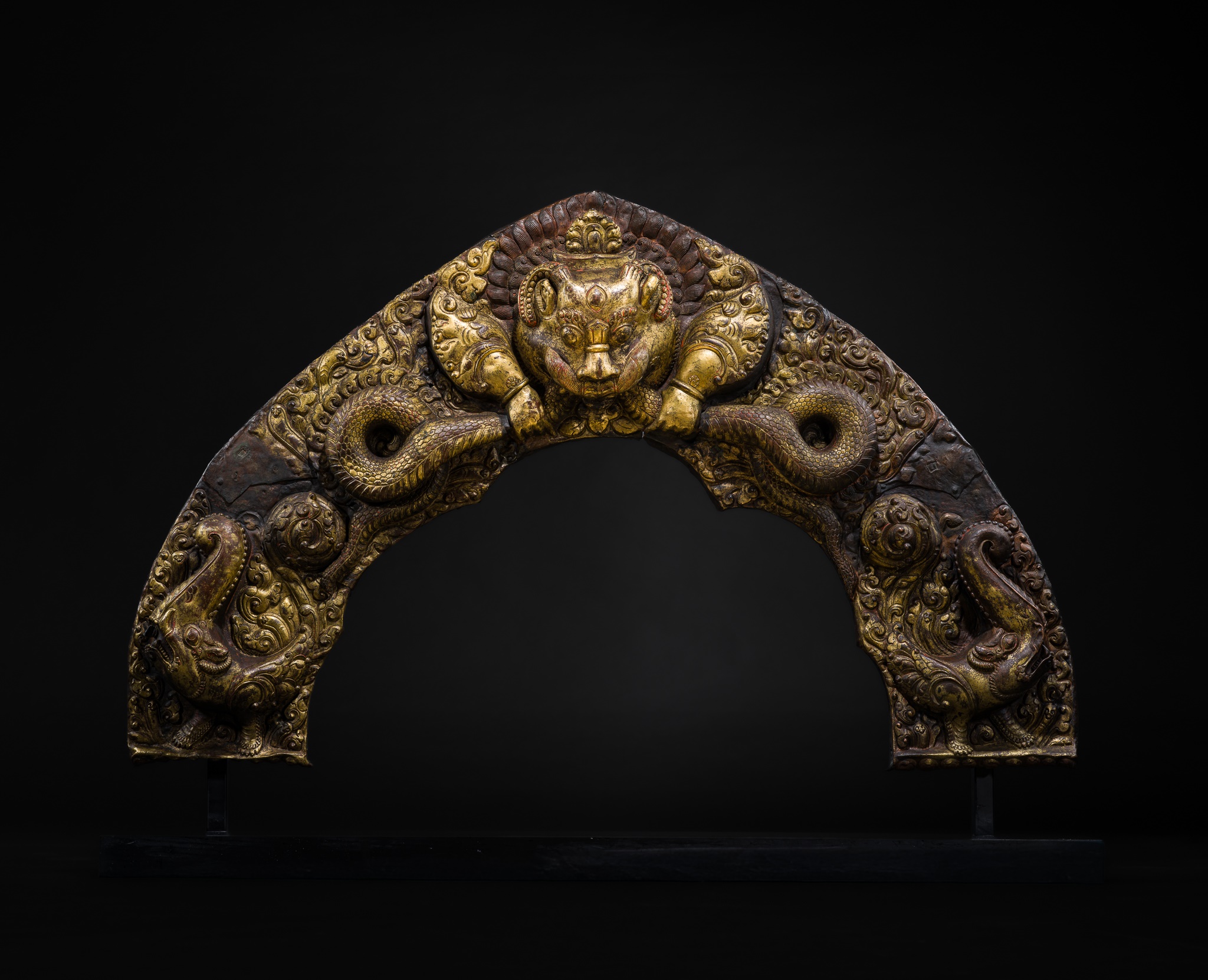
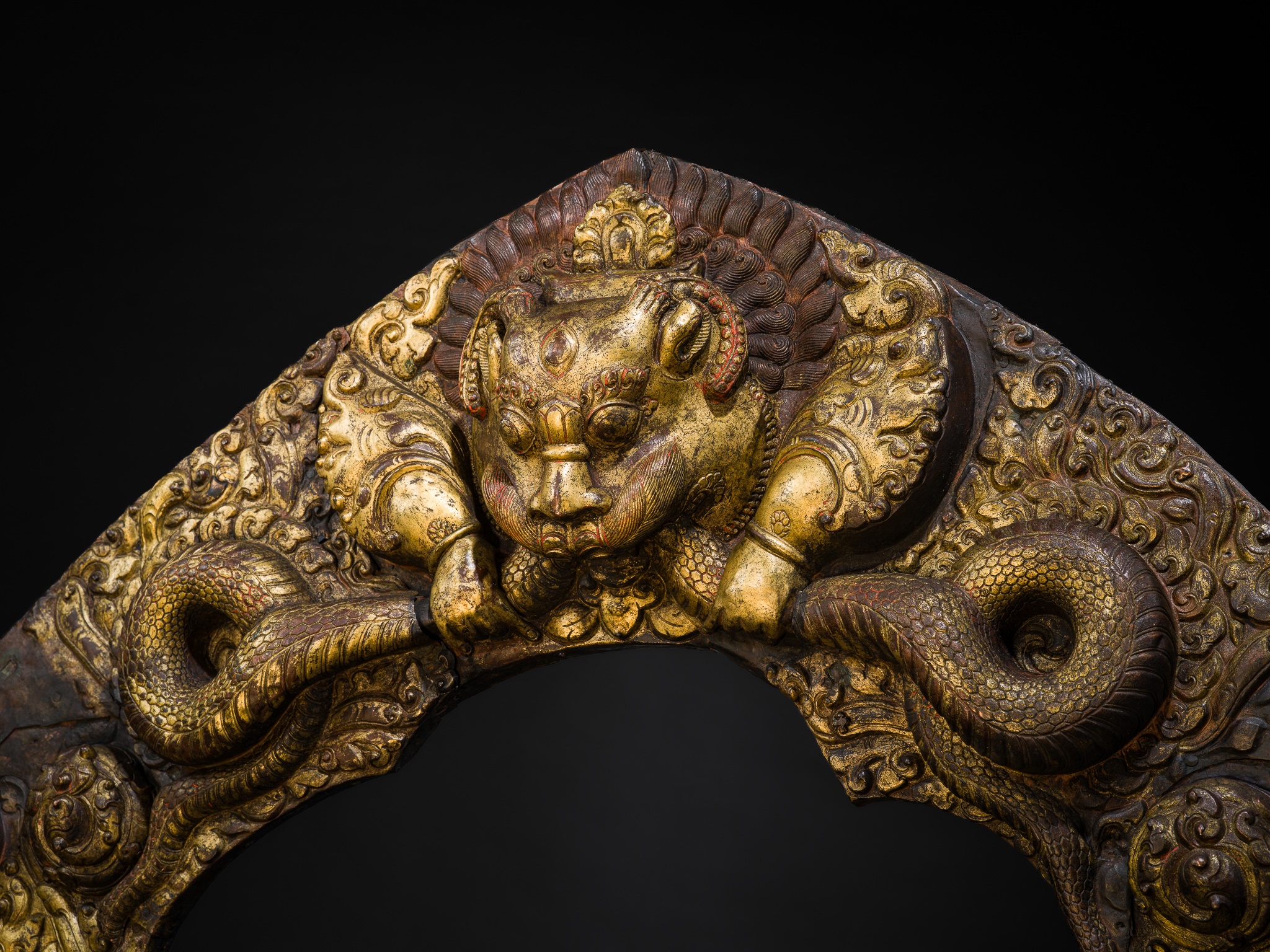
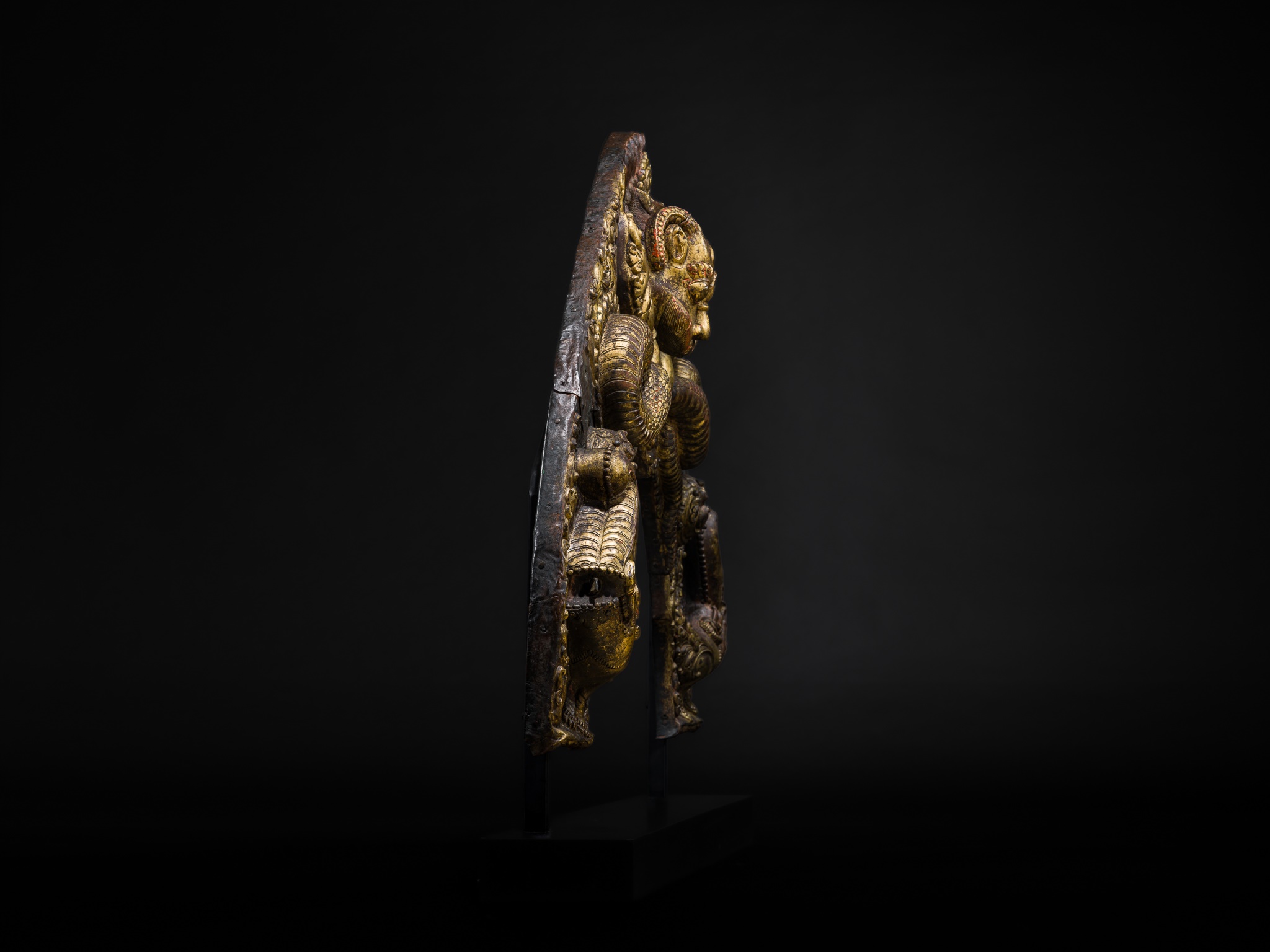
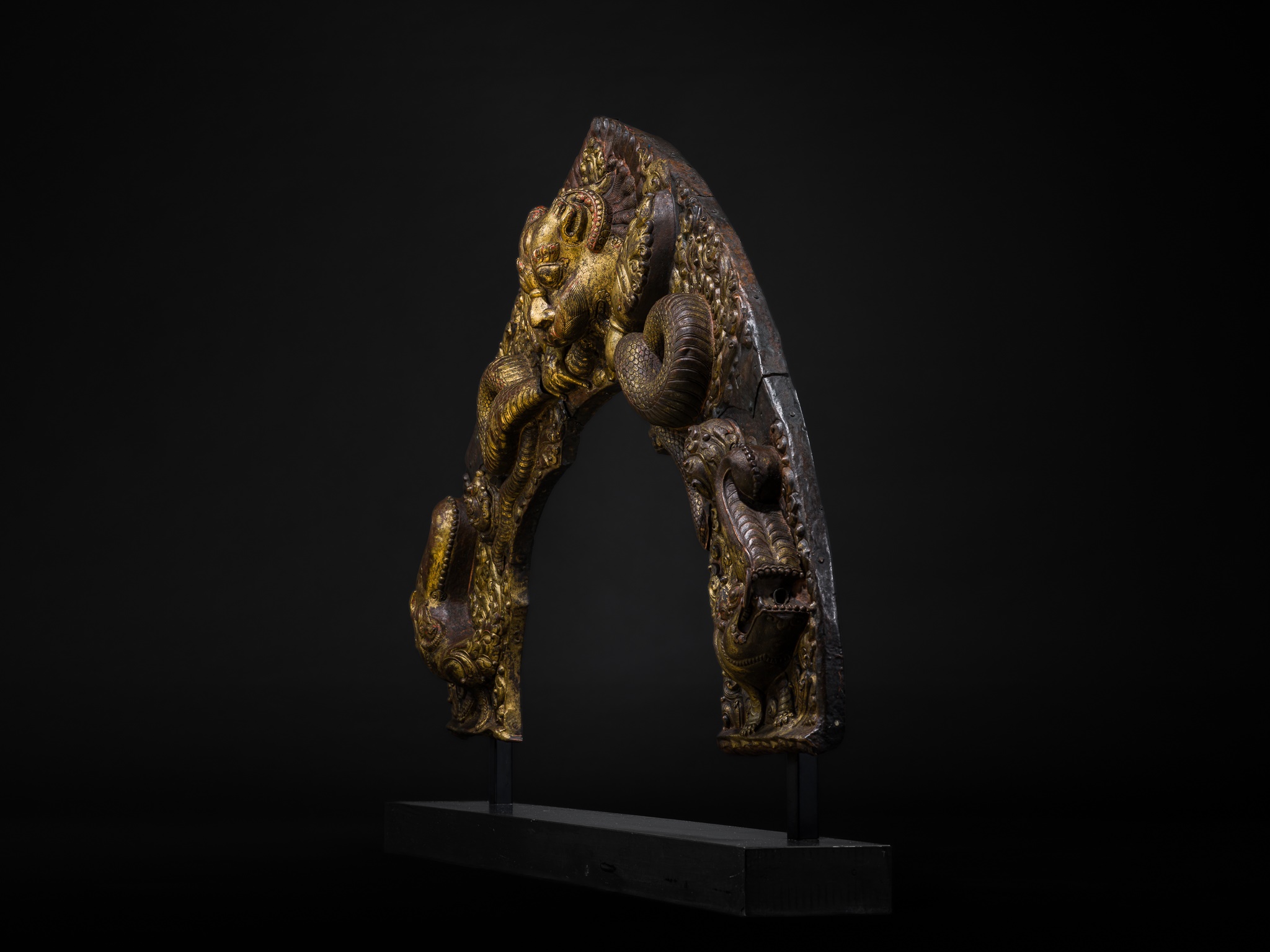
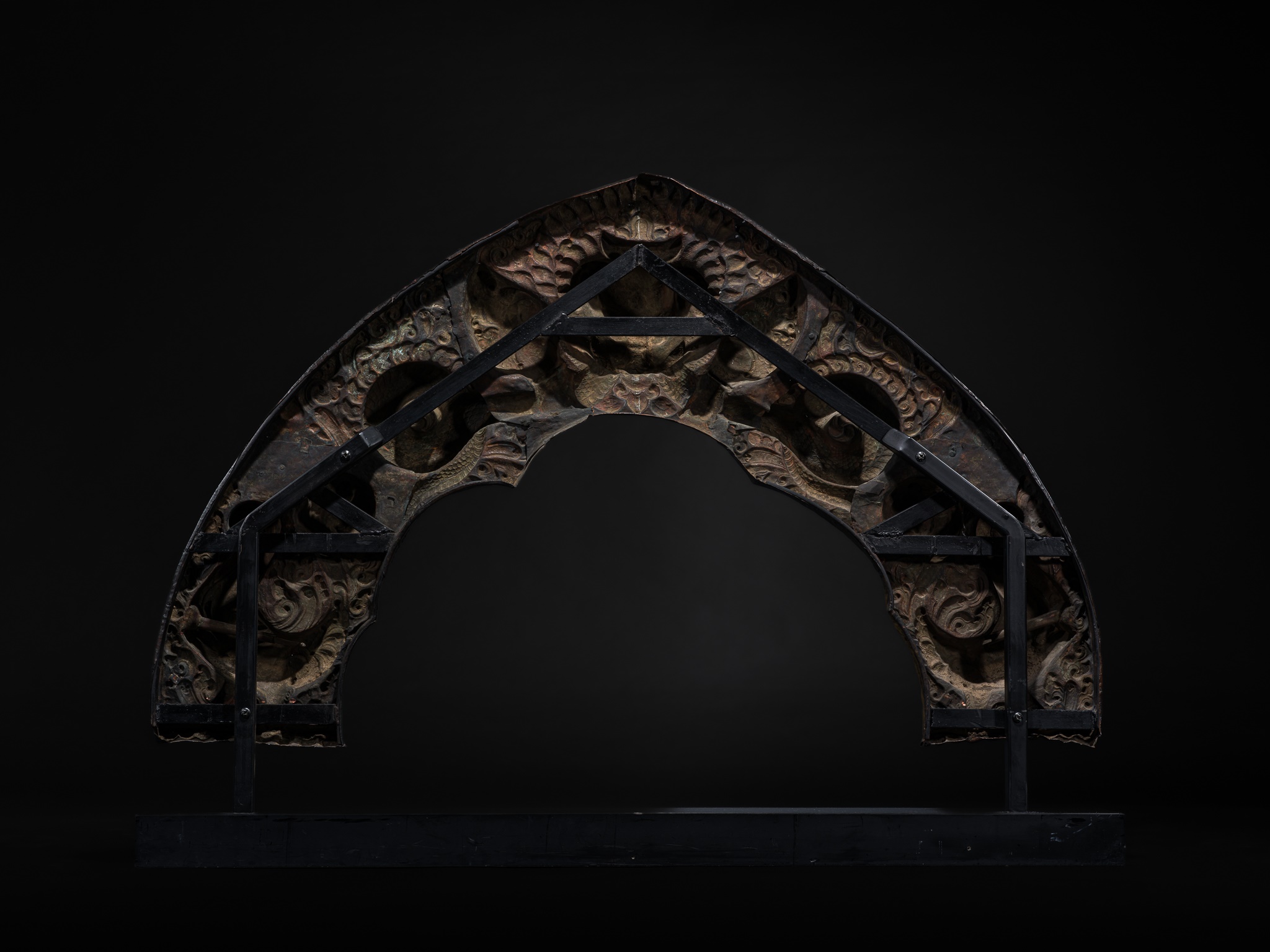
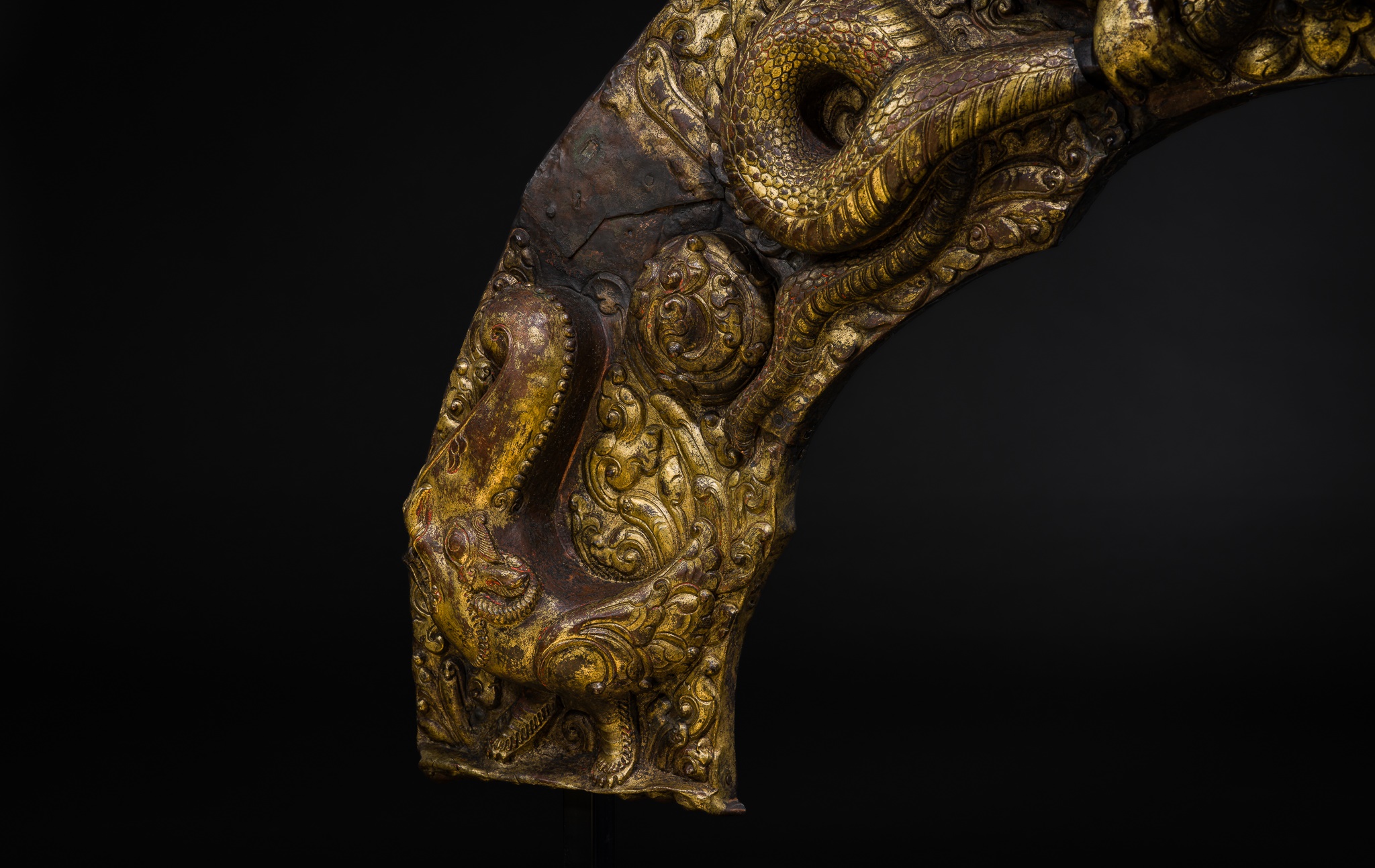
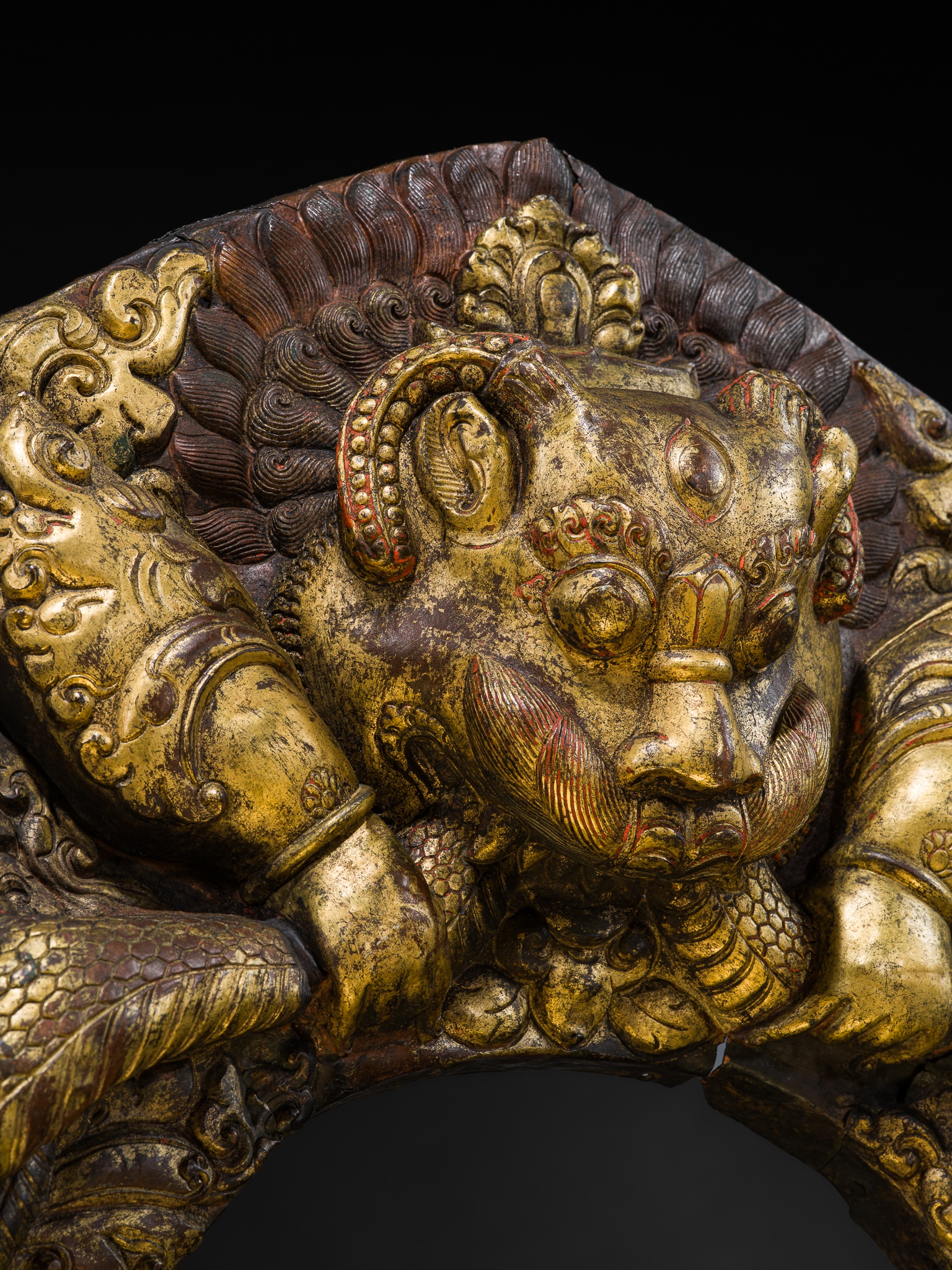
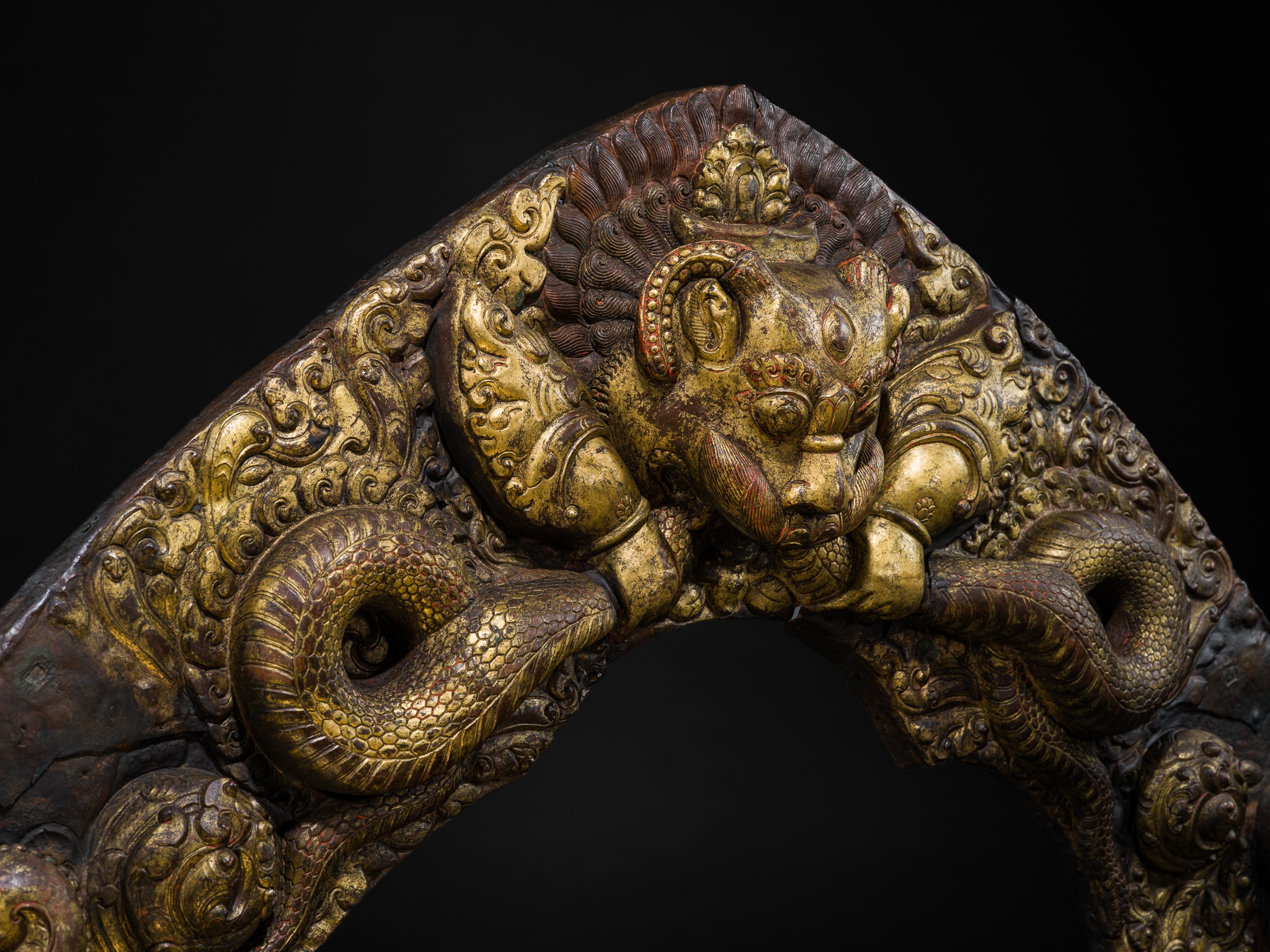
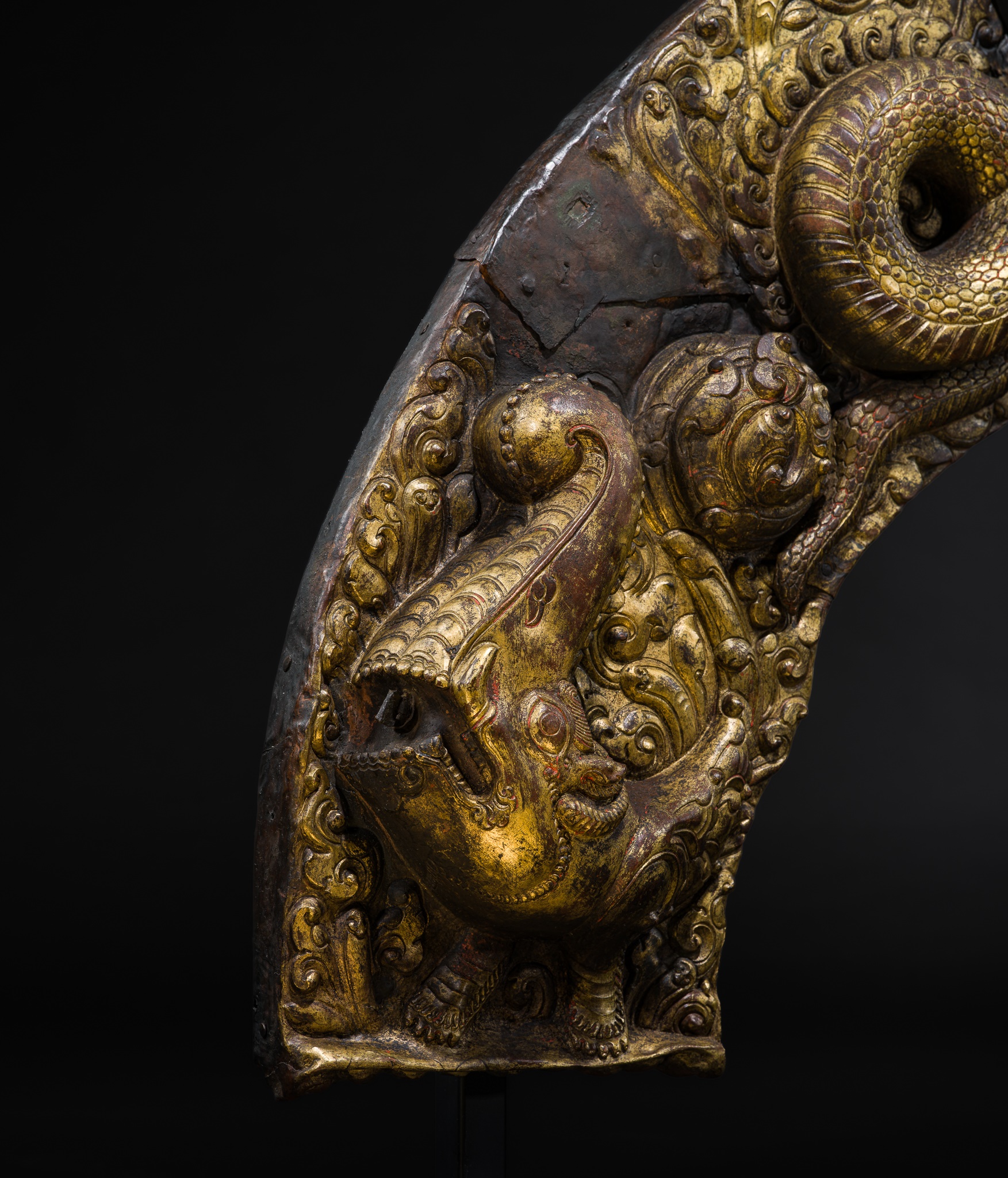
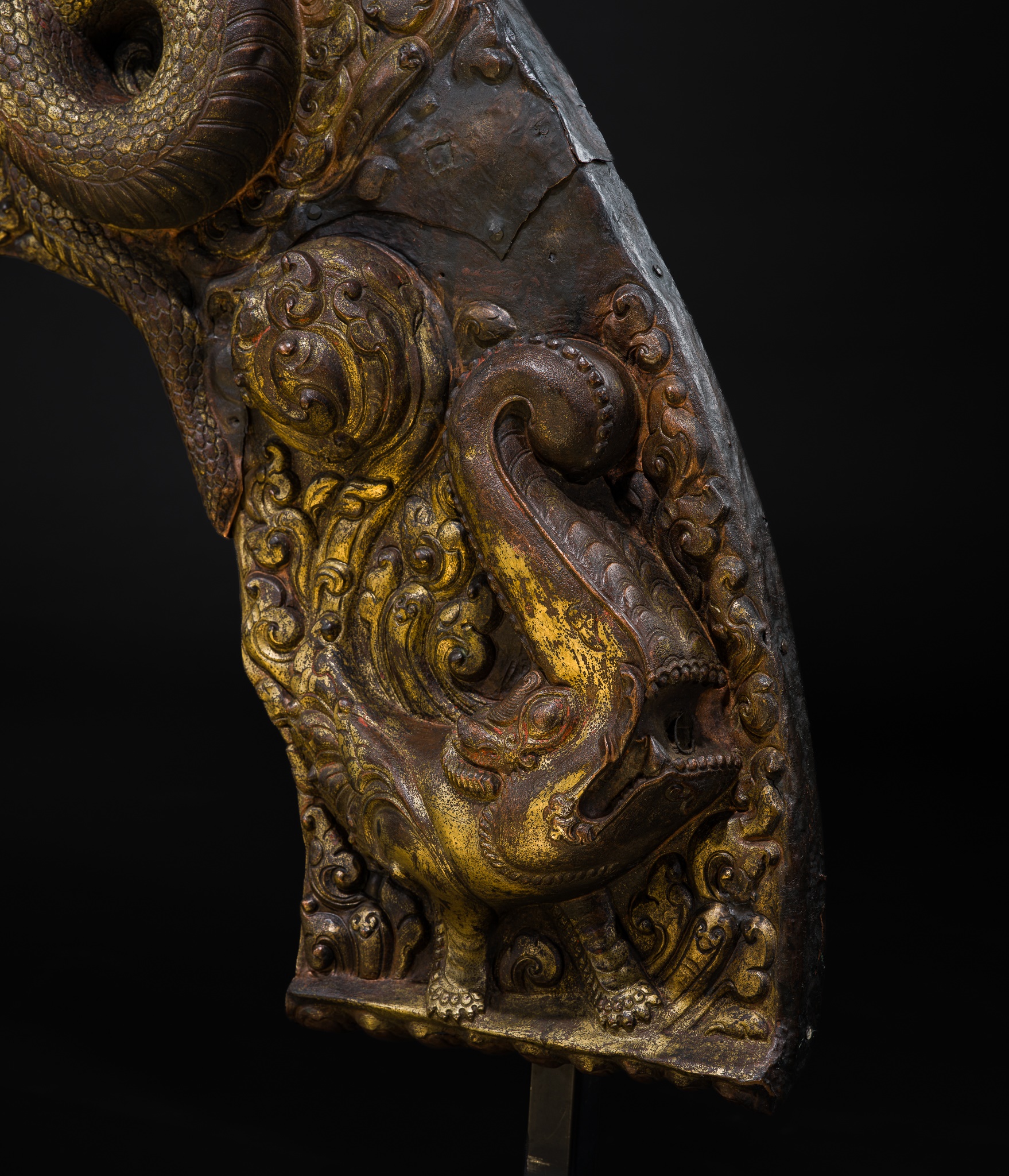
The arched torana with makara at either side standing before swirling waters with trunks thrown backwards, writhing nagas emerging from the ocean and devoured by the kirtimukha above. The entire surface is densely enriched with scrolling foliate motifs, cloud-like curls, and flame-shaped ornament, the deeply modeled forms creating a powerful sense of movement and dimensionality.
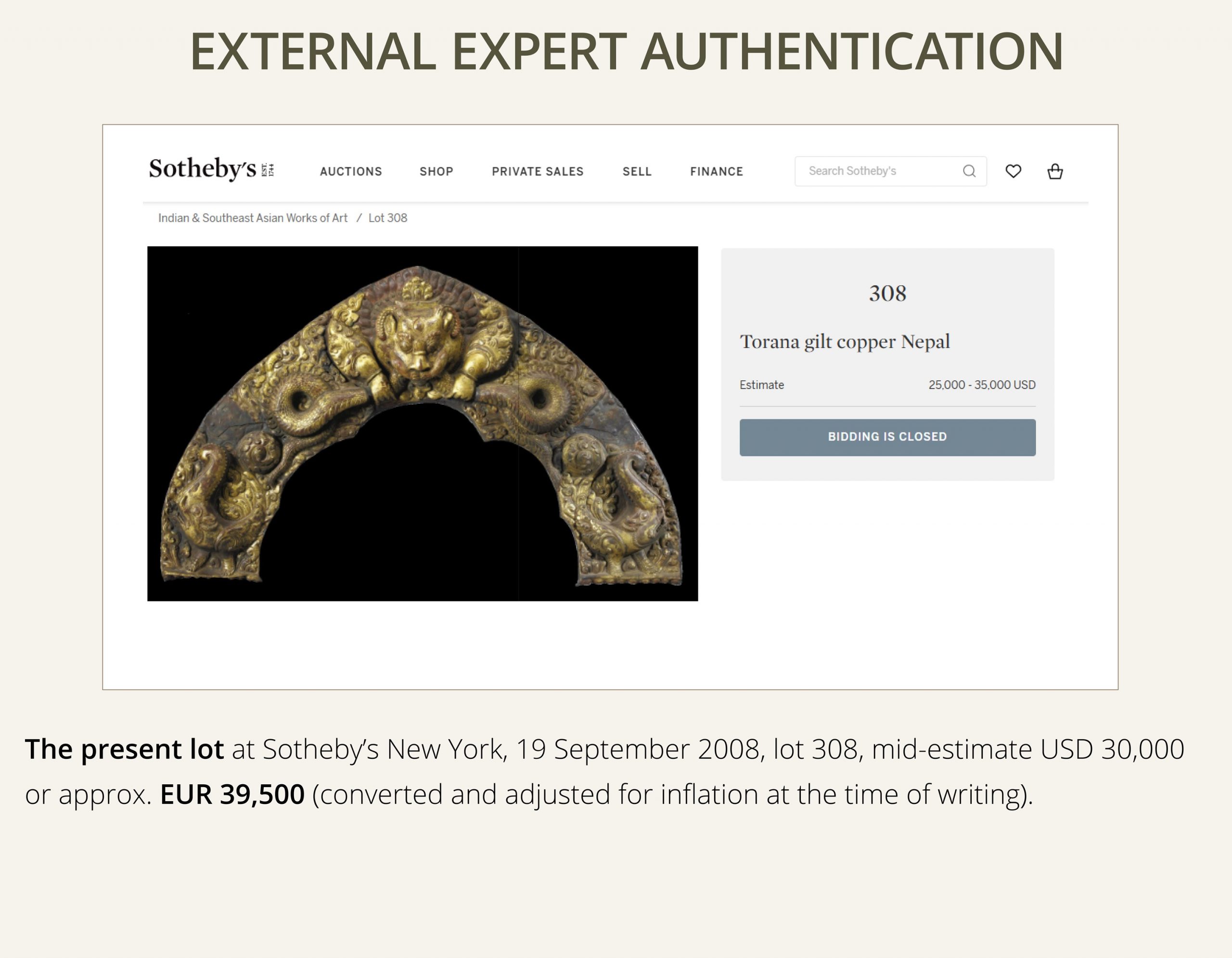
Provenance: J. R. Pons Collection, Spain, 1970s. Sotheby’s New York, 19 September 2008, lot 308, mid-estimate USD 30,000 or approx. EUR 39,500 (converted and adjusted for inflation at the time of writing). The collection of Carlos Cruañas Dalmau, Barcelona, Spain, acquired in 2008.
Condition: Good condition with expected wear and manufacturing irregularities, warping and small dents, few minor tears, rubbing and losses to gilt. Fine, naturally grown patina.
Dimensions: Length 118 cm, Height 73 (excl. stand), Height 88 cm (incl. stand)
Mounted on a modern stand. (2)
This elaborate assortment of mythical creatures frequently surrounds Buddha images. One of each plane – aquatic, terrestrial, and aerial – they evoke Nature’s acceptance of Shakyamuni as a truly enlightened being, conveyed throughout his hagiography. These creatures also function as mythic guardians, with toranas like the present example often appearing above openings to sacred spaces to prevent the invasion of polluting elements.
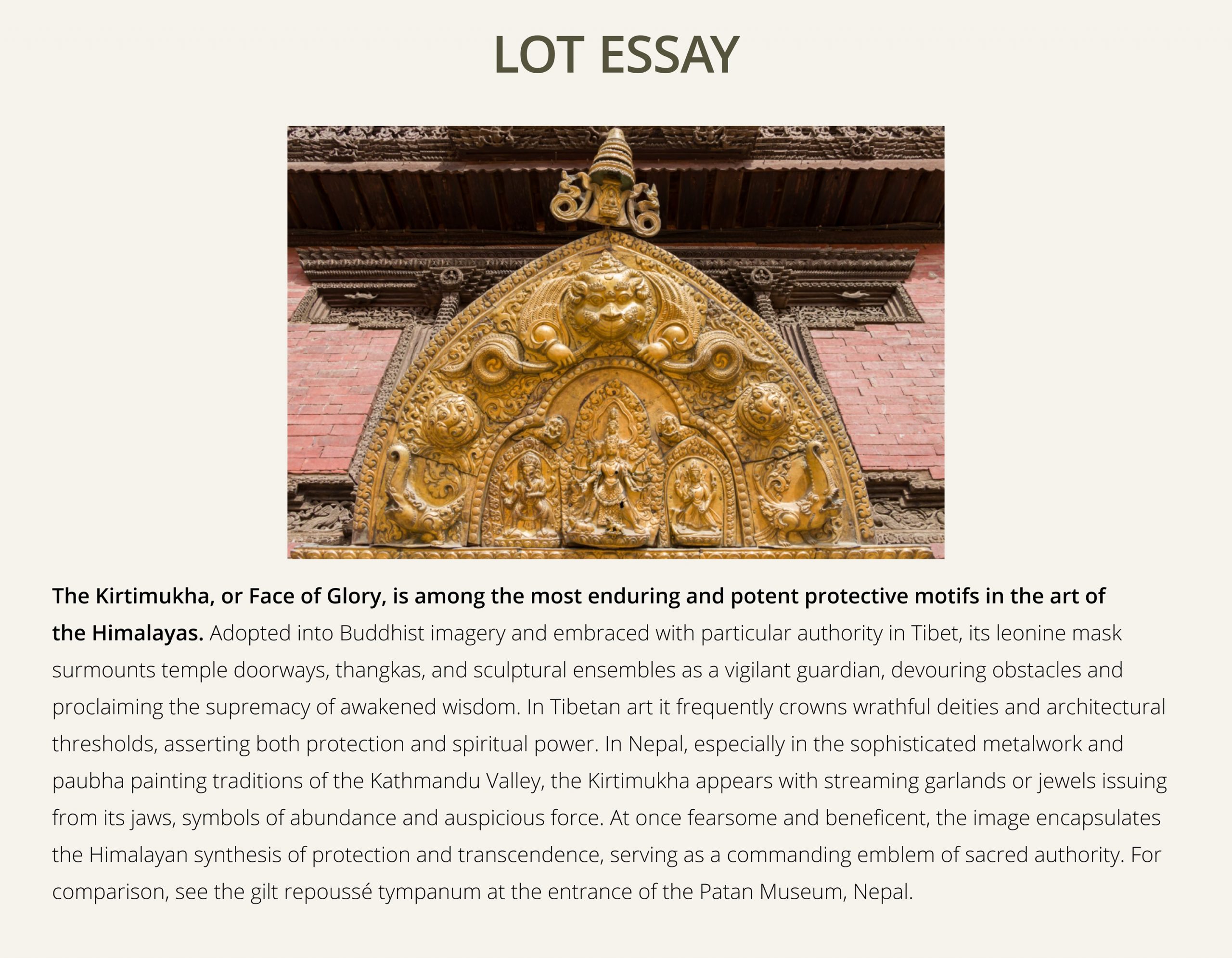
The Kirtimukha, or Face of Glory, is among the most enduring and potent protective motifs in the art of the Himalayas. Adopted into Buddhist imagery and embraced with particular authority in Tibet, its leonine mask surmounts temple doorways, thangkas, and sculptural ensembles as a vigilant guardian, devouring obstacles and proclaiming the supremacy of awakened wisdom. In Tibetan art it frequently crowns wrathful deities and architectural thresholds, asserting both protection and spiritual power. In Nepal, especially in the sophisticated metalwork and paubha painting traditions of the Kathmandu Valley, the Kirtimukha appears with streaming garlands or jewels issuing from its jaws, symbols of abundance and auspicious force. At once fearsome and beneficent, the image encapsulates the Himalayan synthesis of protection and transcendence, serving as a commanding emblem of sacred authority. For comparison, see the gilt repoussé tympanum at the entrance of the Patan Museum, Nepal.
Literature comparison:
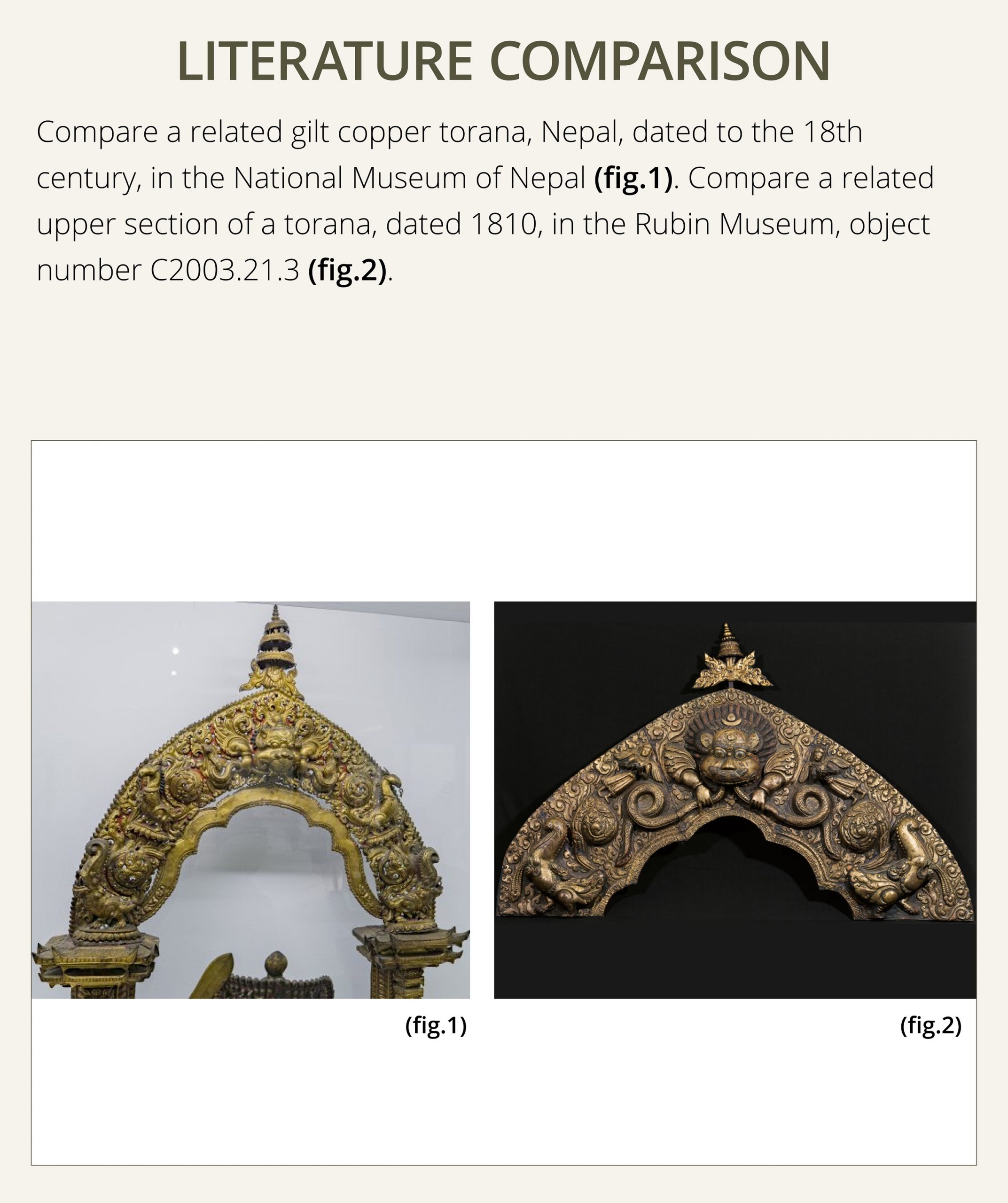
Compare a related gilt copper torana, Nepal, dated to the 18th century, in the National Museum of Nepal. Compare a related upper section of a torana, dated 1810, in the Rubin Museum, object number C2003.21.3.
Auction result comparison:
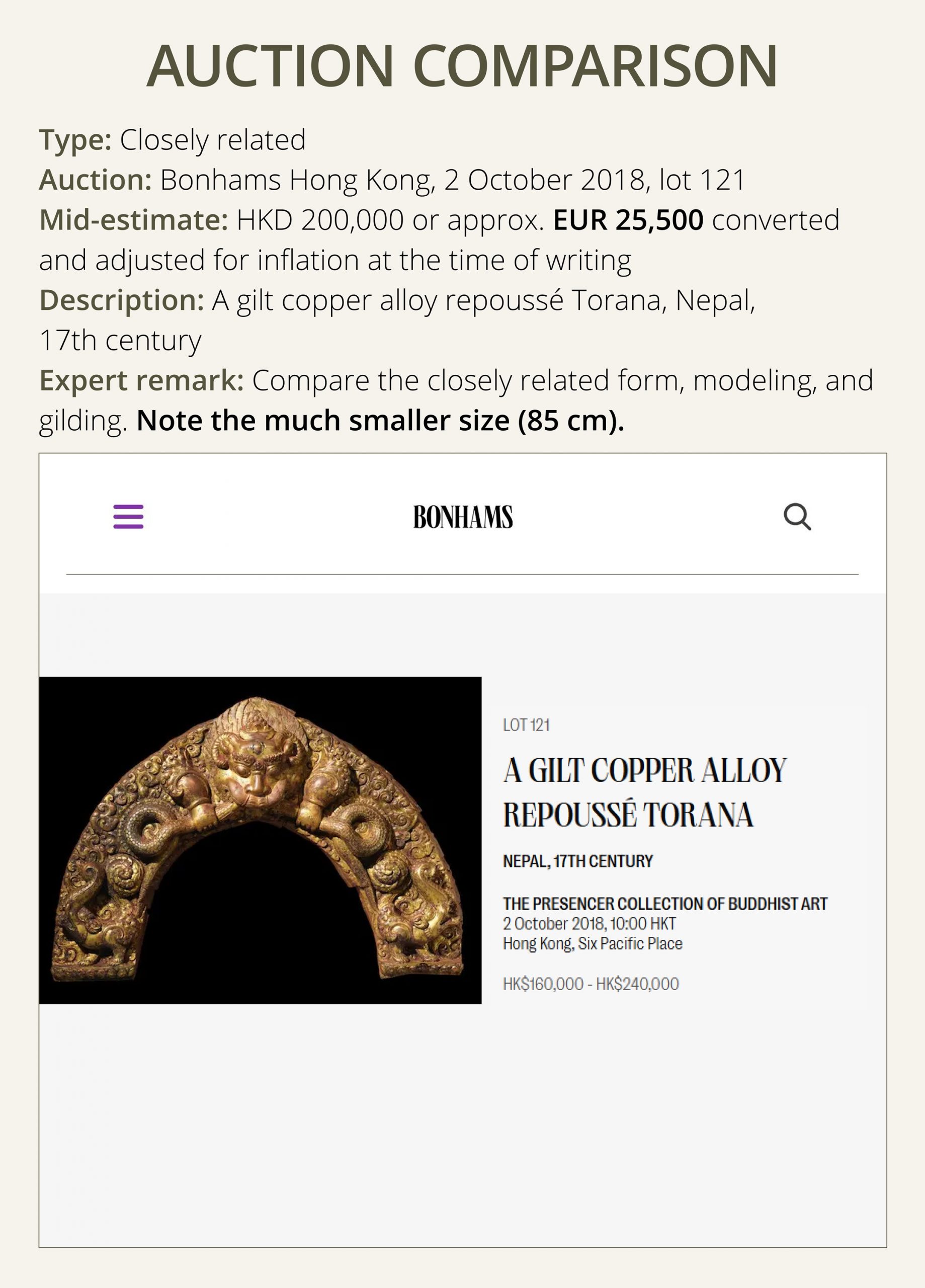
Type: Closely related
Auction: Bonhams Hong Kong, 2 October 2018, lot 121
Mid-estimate: HKD 200,000 or approx. EUR 25,500 converted and adjusted for inflation at the time of writing
Description: A gilt copper alloy repoussé Torana, Nepal, 17th century
Expert remark: Compare the closely related form, modeling, and gilding. Note the much smaller size (85 cm).
Details
- Title : A MASSIVE (118 CM) GILT COPPER ALLOY REPOUSSÉ TORANA
- Year : 17TH CENTURY
- Classification : Cultural object
- Medium : Dimensions: Length 118 cm, Height 73 (excl. stand), Height 88 cm (incl. stand). Mounted on a modern stand. (2)
- Dimension : GILT COPPER ALLOY
- Accession No : Lot 288
- Collection : Zacke
- Acquisition Method : Actioned
- Status : Starting price €7,500Estimate €15,000 I 16th Oct, 2026 11:00