















Lot details
Expert’s note:
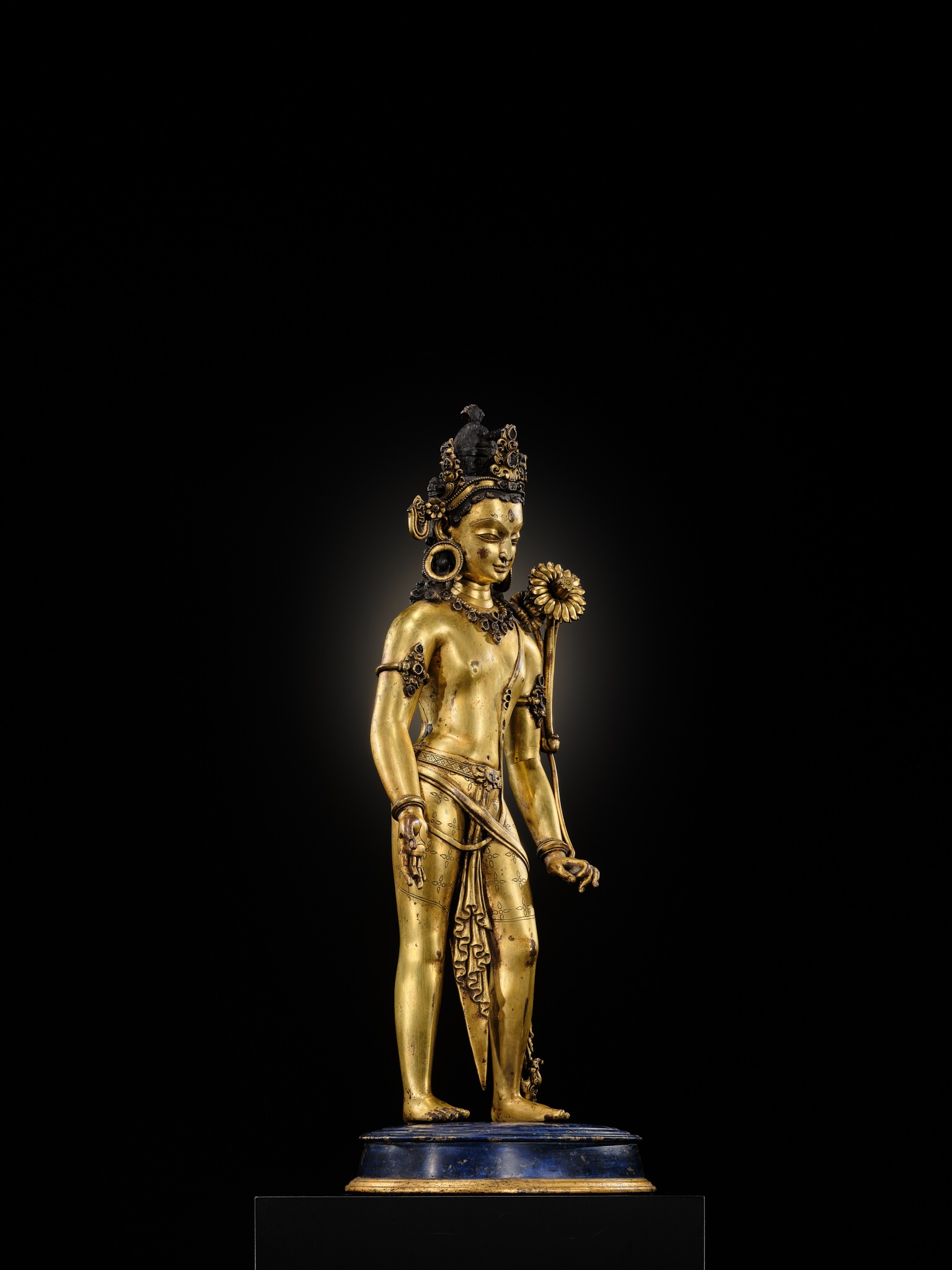
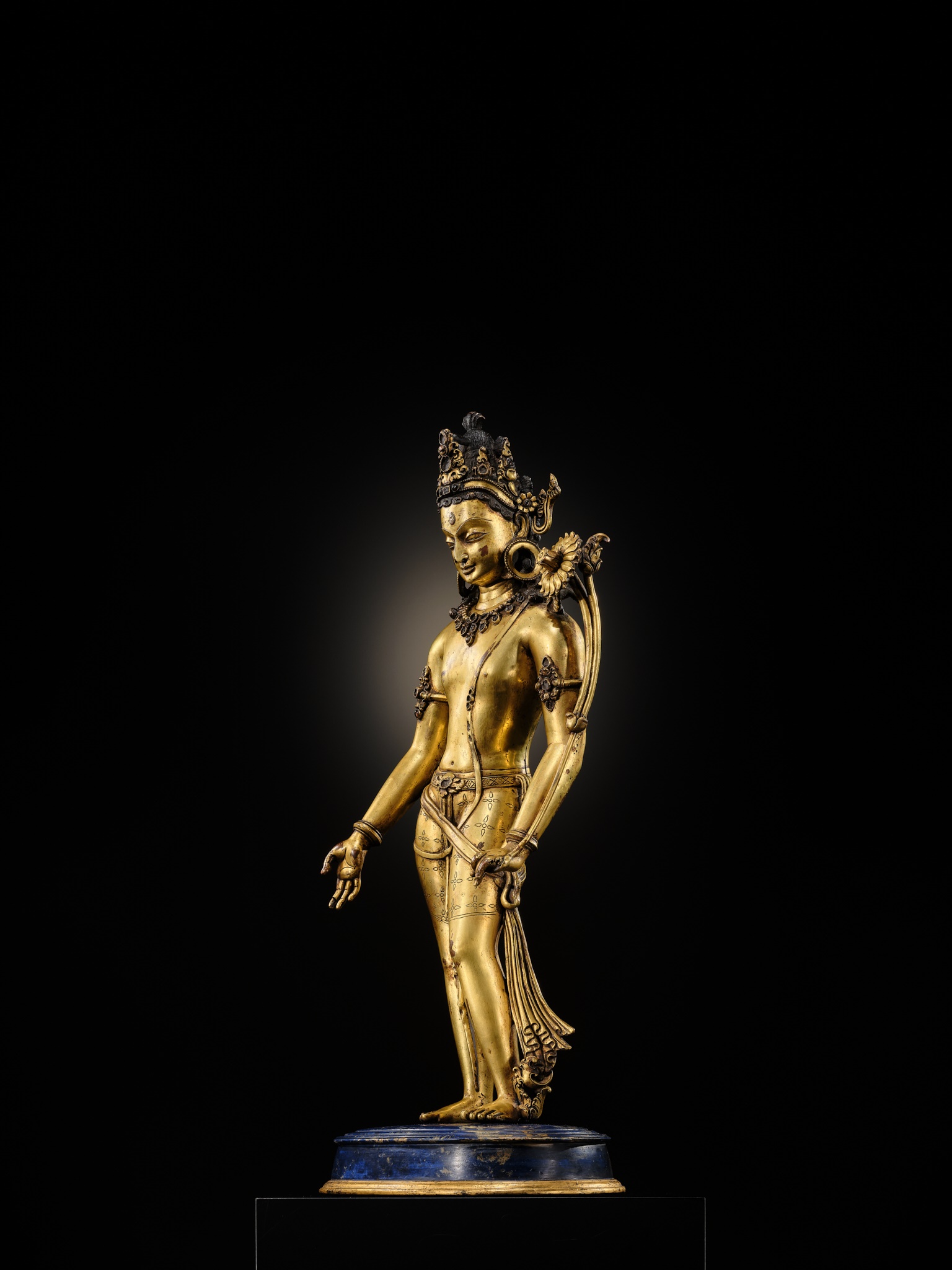
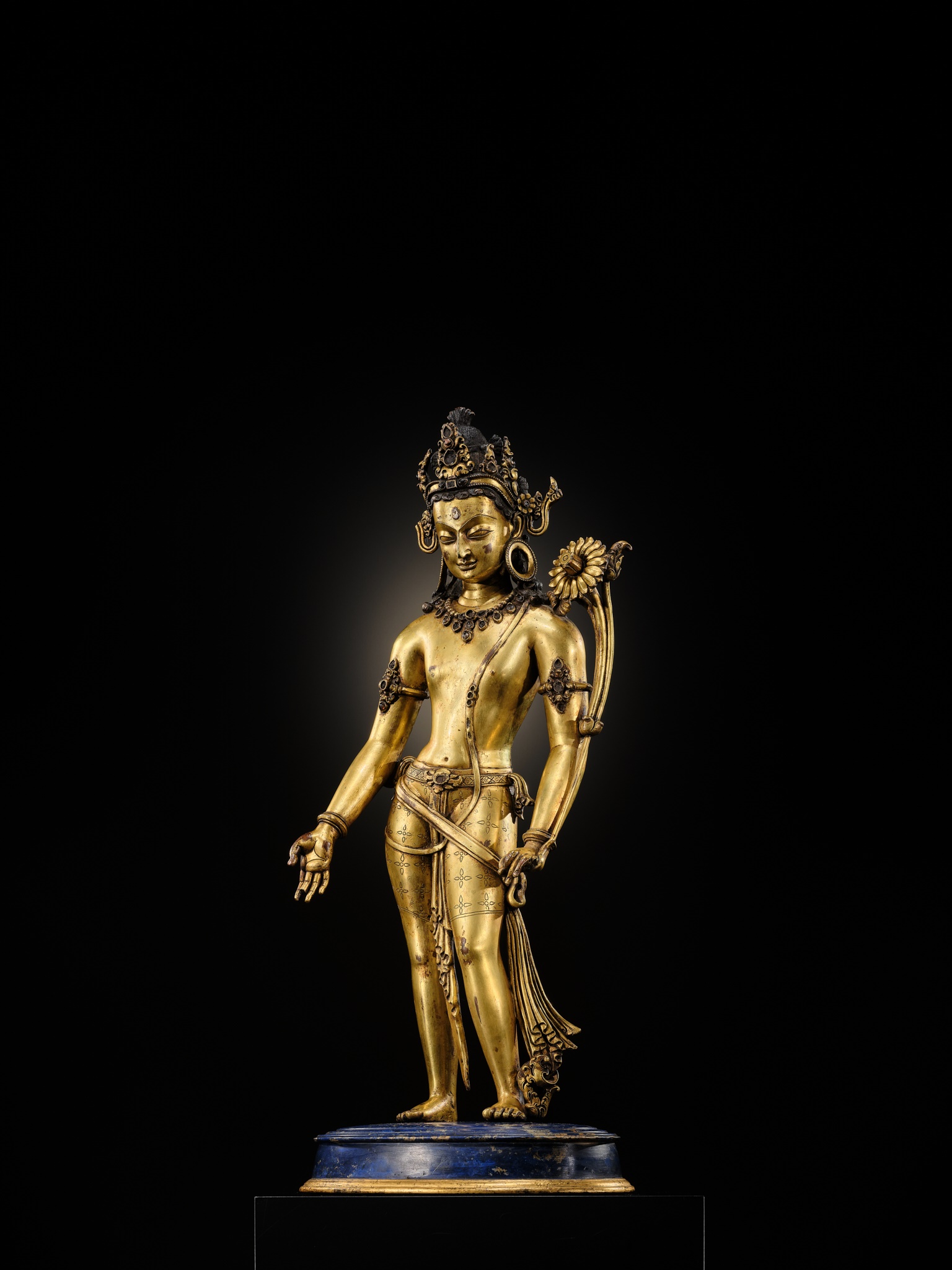
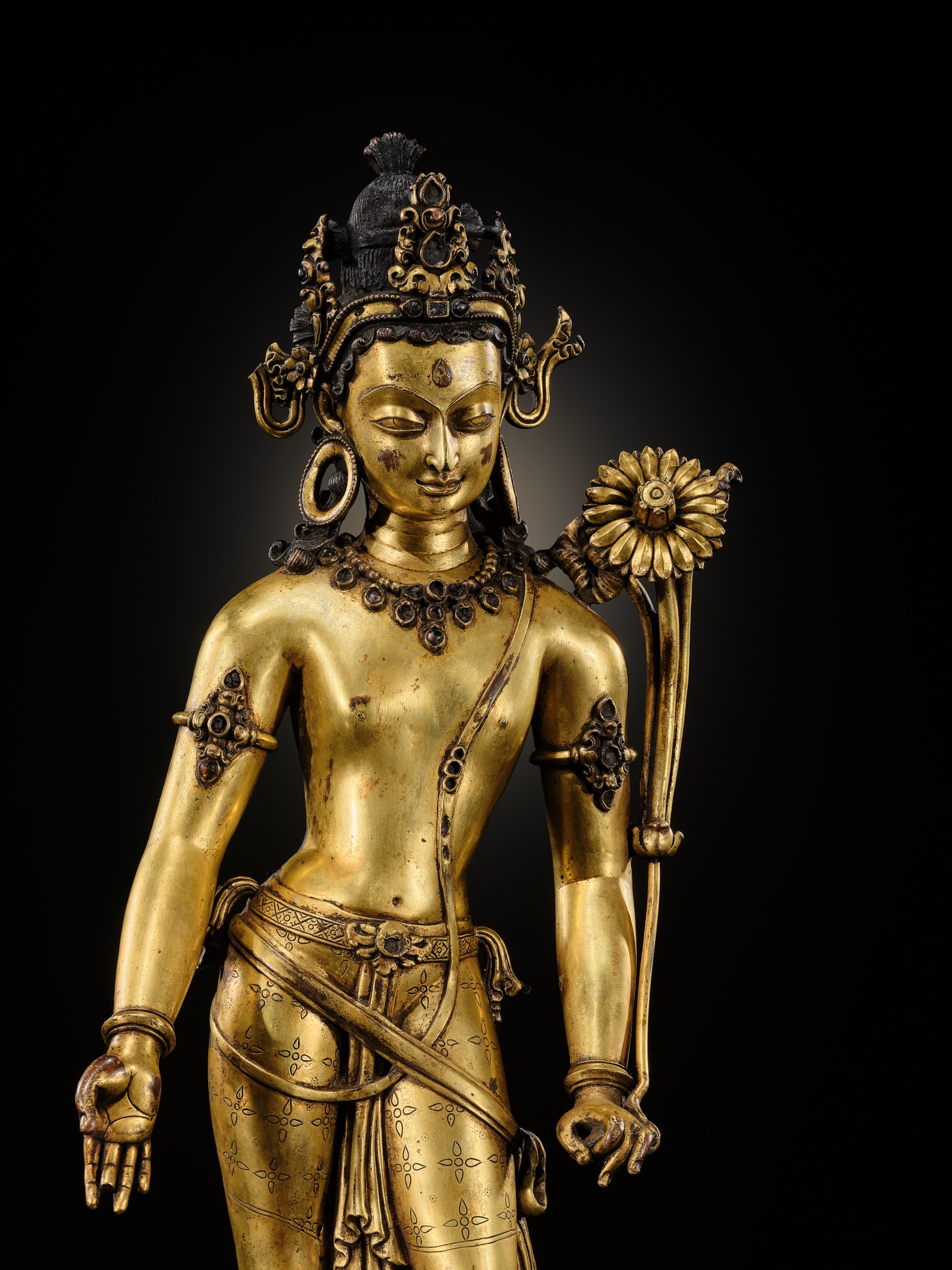
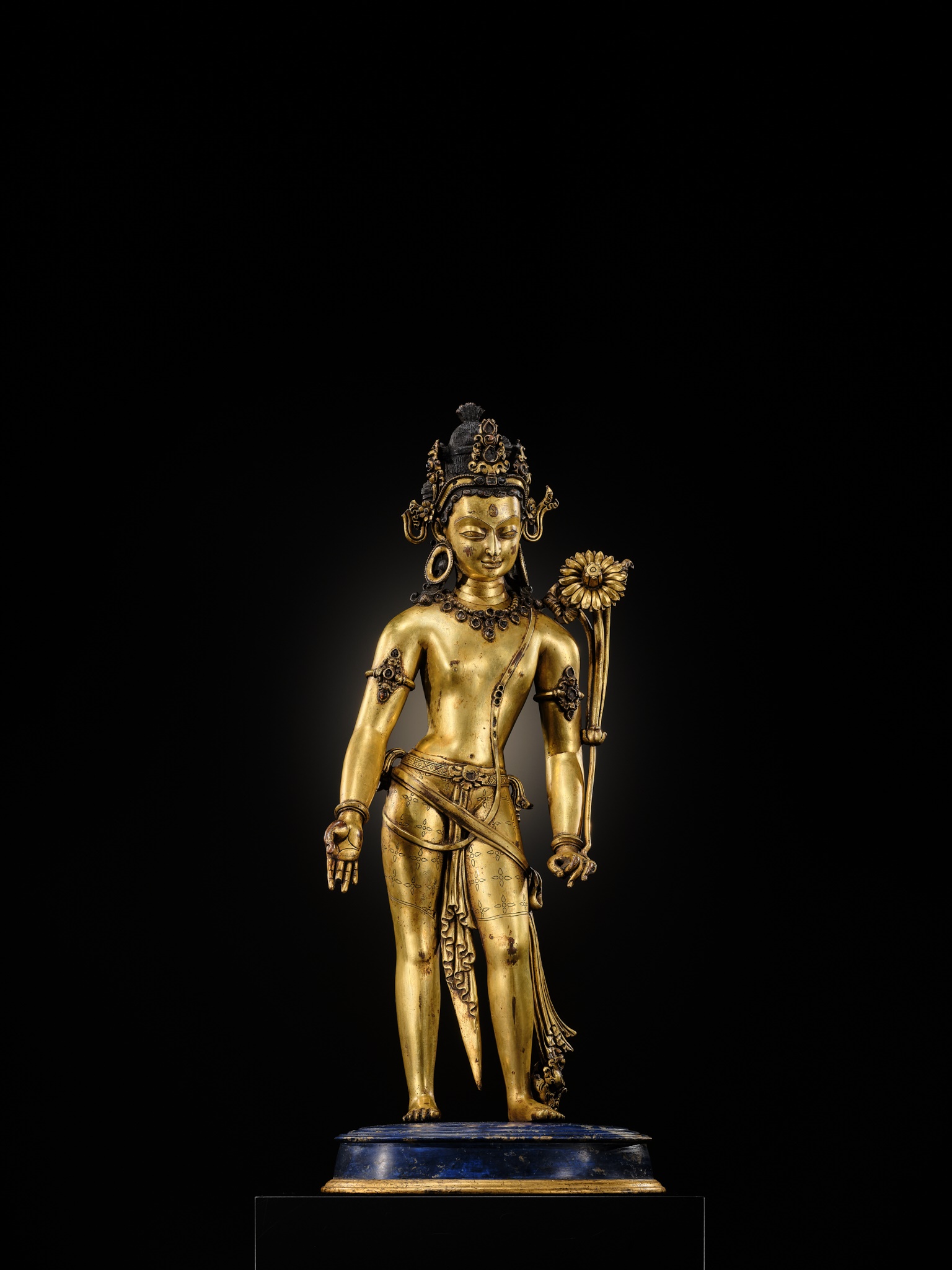
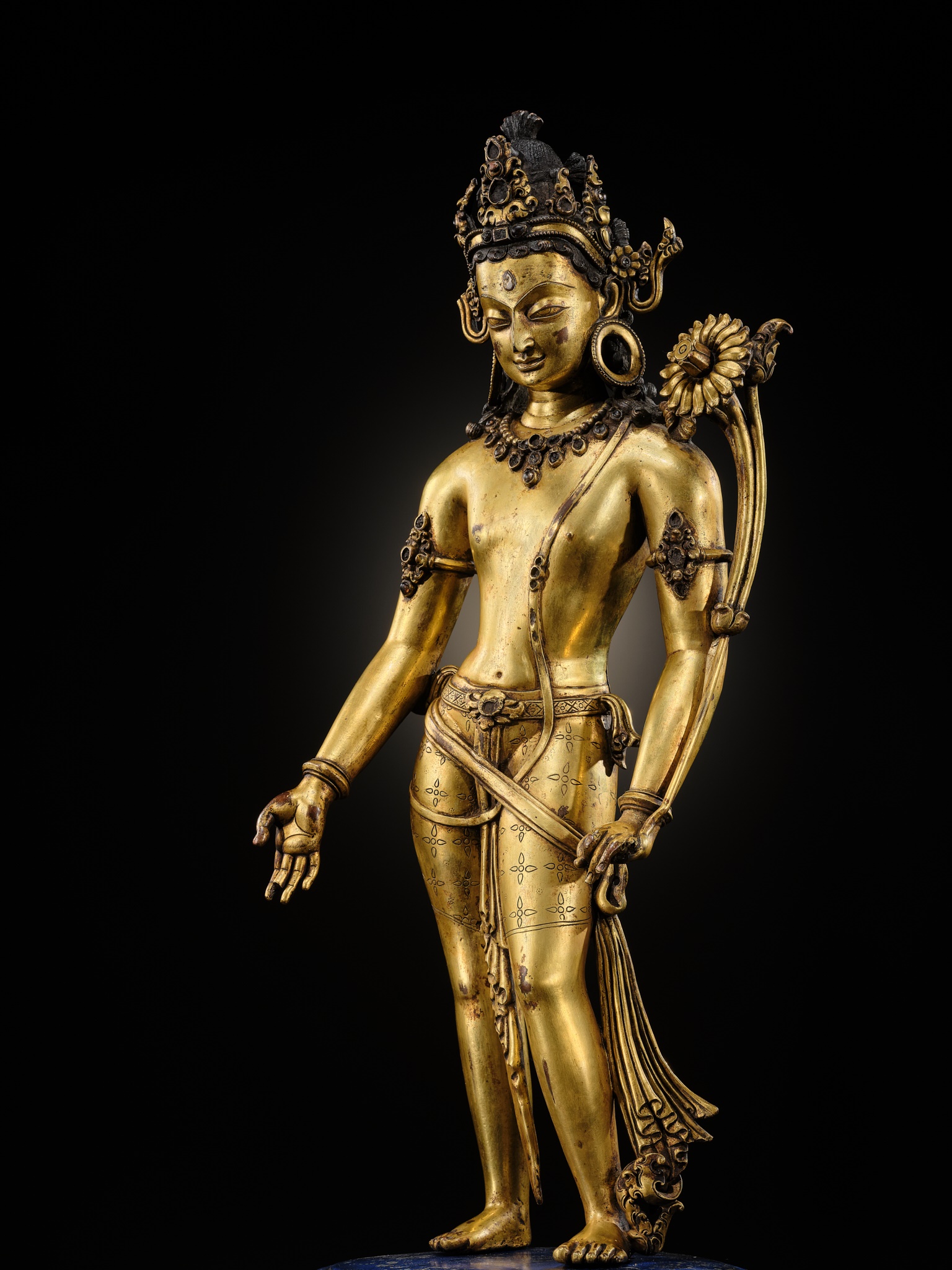
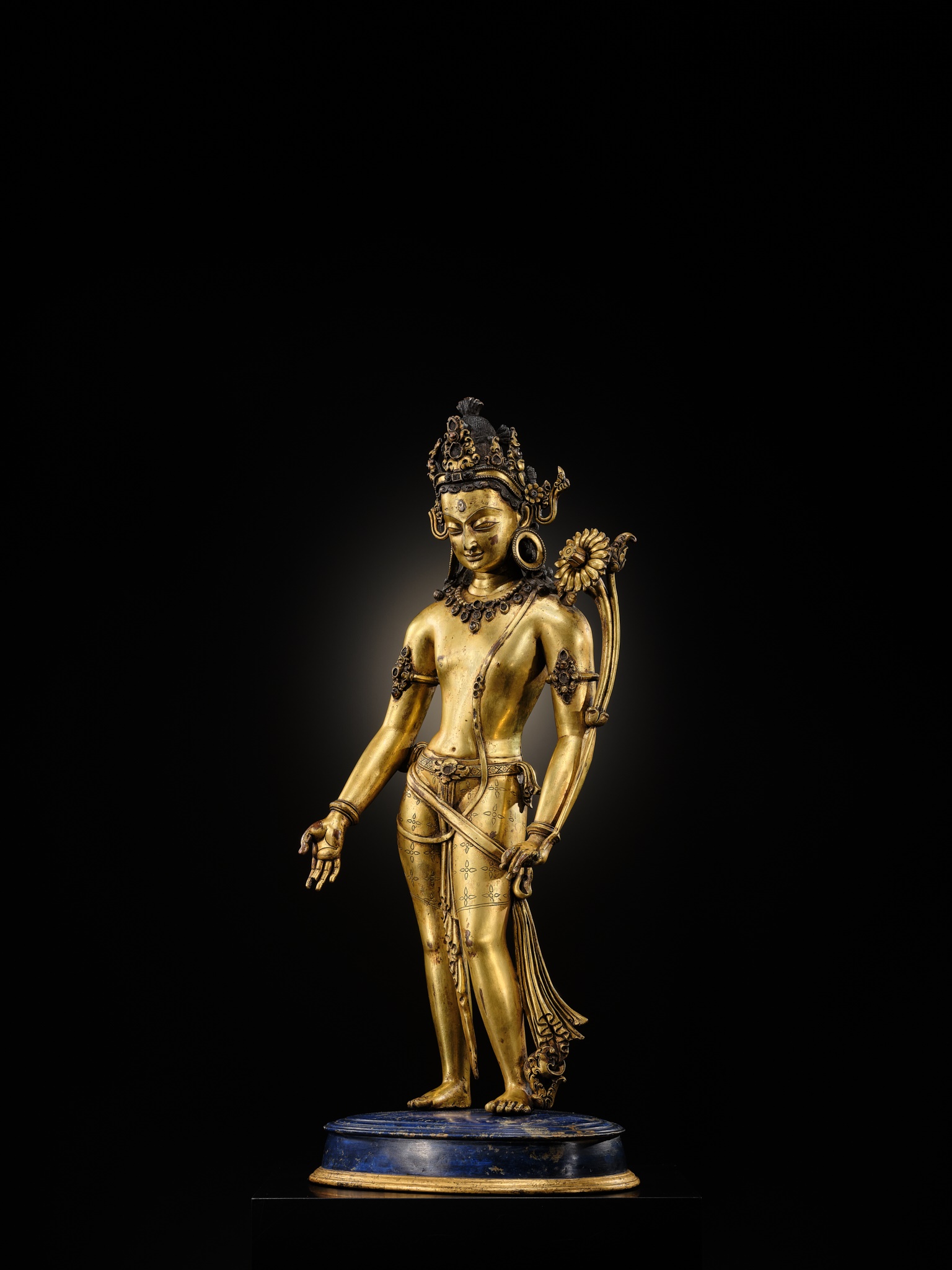
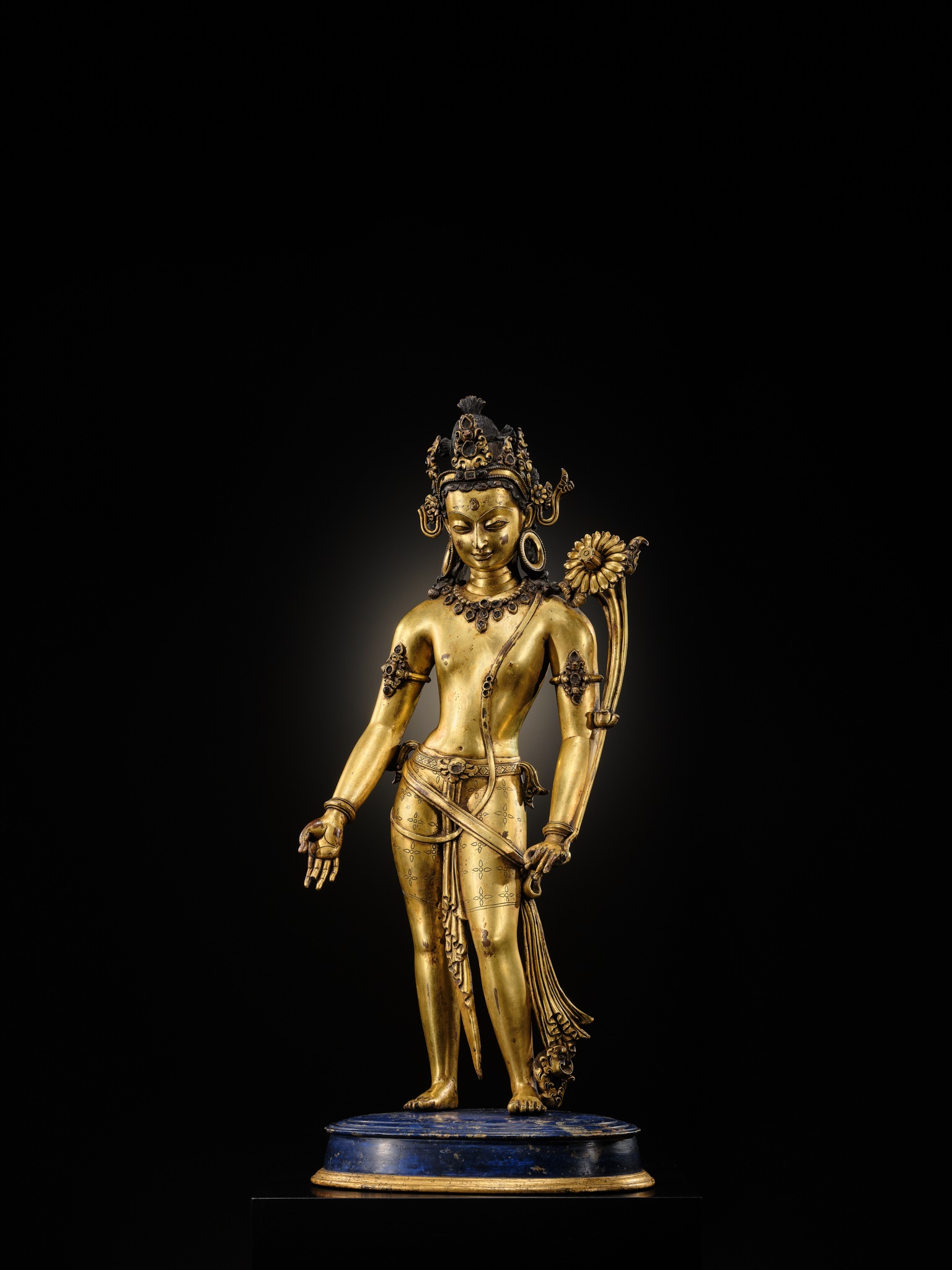
Superb modeling, imposing scale, and majestic bearing combine to create one of the greatest Nepalese Buddhist sculptures known. This magnificent gilt-bronze Padmapani exemplifies the artistry of the Newars, the indigenous people of the Kathmandu Valley.
The 13th century marked a golden era for Nepalese art. Newar sculptors and painters received prestigious commissions throughout Tibet, and their influence would extend to the Mongol court of the Yuan dynasty, but it is works like this Padmapani that convey the exquisite indigenous style of Nepalese art made for Kathmandu Valley patrons.
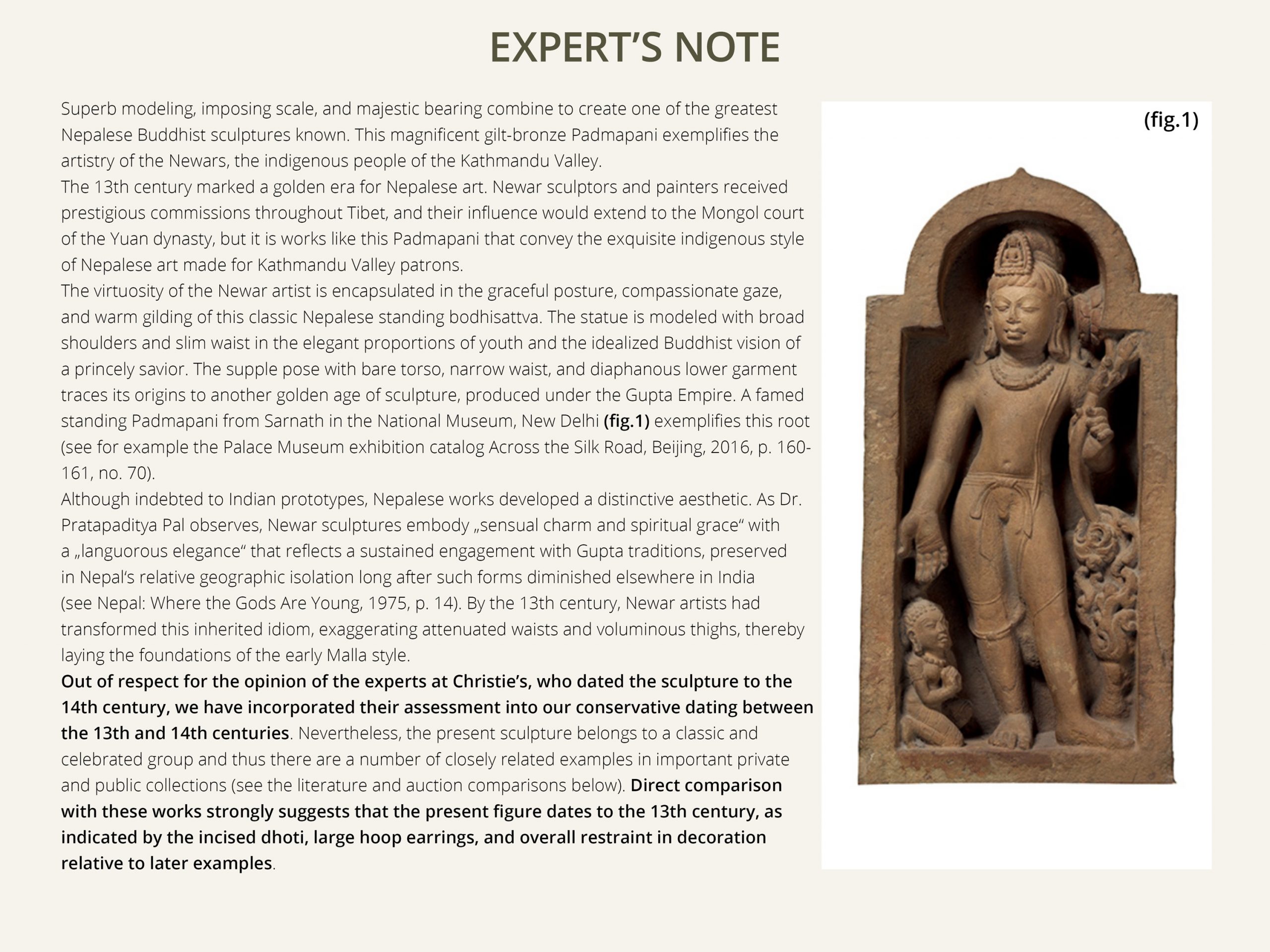
The virtuosity of the Newar artist is encapsulated in the graceful posture, compassionate gaze, and warm gilding of this classic Nepalese standing bodhisattva. The statue is modeled with broad shoulders and slim waist in the elegant proportions of youth and the idealized Buddhist vision of a princely savior. The supple pose with bare torso, narrow waist, and diaphanous lower garment traces its origins to another golden age of sculpture, produced under the Gupta Empire. A famed standing Padmapani from Sarnath in the National Museum, New Delhi exemplifies this root (see for example the Palace Museum exhibition catalog Across the Silk Road, Beijing, 2016, p. 160-161, no. 70).
Although indebted to Indian prototypes, Nepalese works developed a distinctive aesthetic. As Dr. Pratapaditya Pal observes, Newar sculptures embody “sensual charm and spiritual grace” with a “languorous elegance” that reflects a sustained engagement with Gupta traditions, preserved in Nepal’s relative geographic isolation long after such forms diminished elsewhere in India (see Nepal: Where the Gods Are Young, 1975, p. 14). By the 13th century, Newar artists had transformed this inherited idiom, exaggerating attenuated waists and voluminous thighs, thereby laying the foundations of the early Malla style.
Out of respect for the opinion of the experts at Christie’s, who dated the sculpture to the 14th century, we have incorporated their assessment into our conservative dating between the 13th and 14th centuries. Nevertheless, the present sculpture belongs to a classic and celebrated group and thus there are a number of closely related examples in important private and public collections (see the literature and auction comparisons below). Direct comparison with these works strongly suggests that the present figure dates to the 13th century, as indicated by the incised dhoti, large hoop earrings, and overall restraint in decoration relative to later examples.
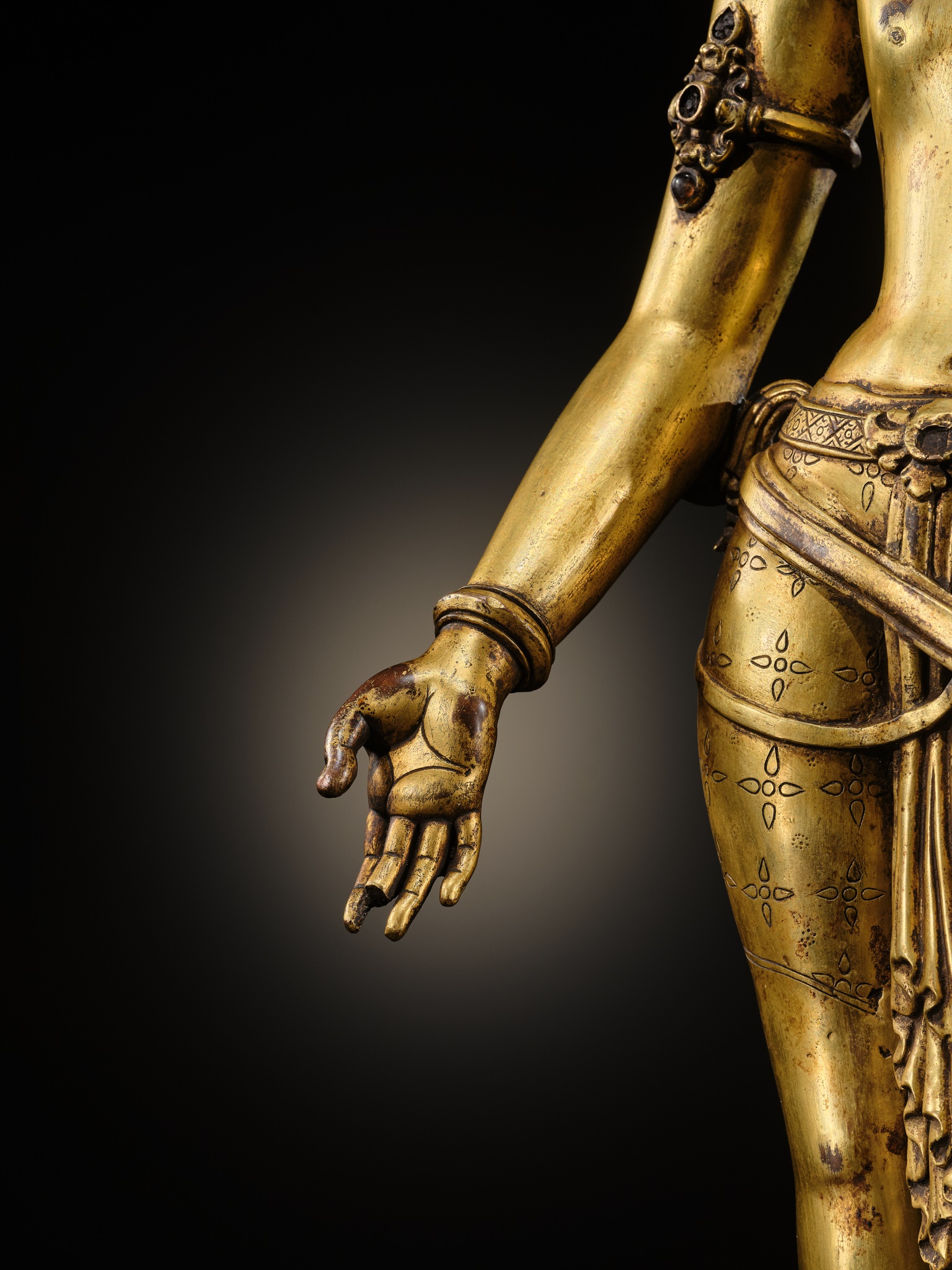
The crowned and jeweled bodhisattva Padmapani stands in graceful tribhanga with his identifying lotus rising at the left shoulder, its stem extending to the left hand held in vitarka mudra, while the right is lowered in varada mudra. A short dhoti incised with stylized flowerheads is secured around the deity’s waist with a floral-lozenge patterned belt. A sacred thread gently hangs over his left shoulder and across his right hip, drawing the viewer’s attention to the sensitive treatment of the tapered waist and powerful legs. A sash covers the thighs and descends in cascading flutters at the hip.
Provenance: A noted private collection, acquired in the Hong Kong art market in 1996, and thence by descent. Christie’s New York, 20 March 2019, lot 685 (dated 14th century), sold for USD 399,000 or approx. EUR 455,000 (converted and adjusted for inflation at the time of writing). The collection of Damien Woliner, Brussels, Belgium, acquired from the above.
Published: Himalayan Art Resources, item number 24503.
Condition: Superb condition, commensurate with age. The photographs published by Christie’s in 2019 document the figure prior to its subsequent conservation and show a single loss to the back, which has since been carefully reconstructed and integrated without materially altering the surrounding original surface, as evidenced by the original cracks remaining clearly visible. The conservation was carried out to the highest museum standards. The figure was further carefully cleaned and remnants of an old brownish varnish, clearly visible in the Christie’s photographs, were removed; minute areas of gilding were sensitively retouched. These interventions are fully documented by direct comparison of the before-and-after photographs. A fitted base was subsequently commissioned by the present owner, incorporating an earlier, probably 16th–17th century wooden support with a neatly applied scagliola decoration in period style. Considering the monumental scale of the figure and its age of approximately 700–800 years, its overall state of preservation must be regarded as exceptional.
Weight: 6.6 kg (excl. base), 9 kg (incl. base)
Dimensions: Height 50.5 cm (excl. base and tang), 53 cm (excl. base, incl. tang), 55.5 cm (incl. stand)
With an associated Italian scagliola base. (2)
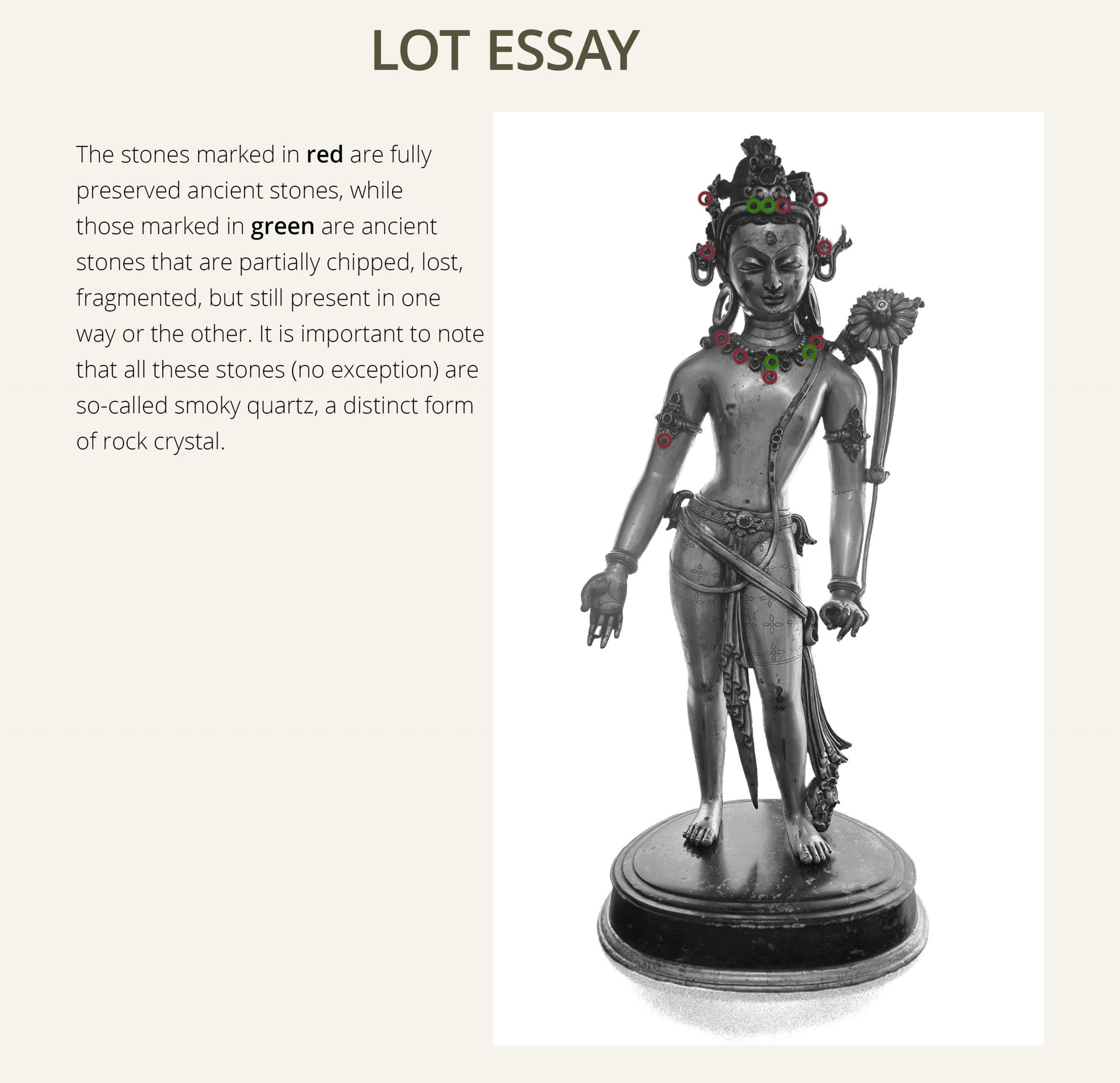
Note about the inlays: The figure retains a substantial number of inset smoky quartz cabochons, which are most likely original to the work. Particularly compelling is the presence of the stones in varying states of preservation, ranging from remarkably well-preserved cabochons to partially fragmented examples and small residual splinters remaining within individual settings. This naturally varied pattern of deterioration is highly characteristic of an original, undisturbed stone setting and would be difficult to reconcile with later replacement. The survival of such an extensive original stone embellishment is comparatively rare and considerably enhances the importance of the present figure.
Avalokiteshvara, the “Lord who looks upon the World,” is the bodhisattva of compassion, and one of the principle deities in Mahayana Buddhism. Although he has attained enlightenment like the Buddha, the bodhisattva forgoes his escape from the suffering of rebirth to act as a guide to all living beings until they themselves have achieved nirvana. Worshiped in many guises, here he is depicted as Padmapani, the “holder of the lotus.” Like the lotus, which rises from its murky bed below the water to blossom in the pristine air, Padmapani has detached himself from the grounding pain and impurities of the material world and is enlightened in body, speech, and mind.
Worshiped in Nepal from at least the mid-sixth century, Avalokiteshvara was one of the most popular Buddhist deities in the Kathmandu Valley. Demand for images of this auspicious bodhisattva was great and from an early period, craftsmen throughout the valley were executing works in wood, stone, paint, and bronze. The deity is nearly always depicted standing, in contrast to the Indian tradition of showing him seated. The style is further characterized by the lithe form of the body and the swaying hips, with the head tilted to the side, resulting in a graceful curvilinear form. The dhoti billows in voluminous folds between the legs and is secured across the thighs with a loosely-draped sash, while the sacred thread hangs from the shoulder across the torso and thighs.
The sculpture of the early Malla period, starting from the second half of the twelfth century through the fifteenth century, is characterized by pronounced musculature and elaborate ornamentation. Images of Padmapani Lokeshvara, in particular, have wider and more rounded thighs and broader shoulders. The face of the present example, however, is closely related to a bronze figure of Padmapani Lokeshvara at the Victoria & Albert Museum dated to the fourteenth century (see literature comparison below); both share large hoop earrings, pronounced arching brows, and elongated foliate diadems and chignons.
Closing expert notes: Without questioning the assessment made by Christie’s specialists for the sale of 20 March 2019, the reserve of USD 120,000 appears way too low when considered against the figure’s exceptional scale and the auction record for this group. The catalogue photography also did not fully convey the monumentality and sculptural presence of the work.
The figure nevertheless sold for USD 399,000, more than tripling its low estimate, but still substantially below prices achieved by considerably smaller examples, including a 32 cm figure dated to the 14th century that realized more than EUR 700,000, and a 45 cm example dated to the 13th century that exceeded EUR 3 million (see auction result comparisons).
The purchaser was Damien Woliner, noted collector, expert, and regular exhibitor at TEFAF Maastricht, who has handled major works of Nepalese art for a long time. During the following seven years, the figure remained in his collection and underwent a prolonged program of museum-level conservation (see condition report for more details).
The present offering therefore provides a unique opportunity to reassess the work following conservation and further study. As customary in our sales, the reserve has been set substantially below the owner’s original acquisition price, leaving the determination of its present market value to competitive bidding. In the opinion of the present author, the figure represents a major work of early Malla-period sculpture whose scale, quality, condition, and historical importance are impossible to parallel within the six-figure price range.
Literature comparison:
Compare a closely related gilt-bronze figure of Avalokiteshvara, Nepal, dated 13th-14th century, 41 cm high, in the Rubin Museum of Himalayan Art, object number C2005.16.8. Compare a closely related gilt-copper alloy figure of a bodhisattva, dated 13th century, 60.3 cm high, in the Norton Simon Museum, accession number F.1983.28.S. Compare a closely related larger gilt-copper figure of Avalokiteshvara, produced in Nepal, or possibly Tibet, dated to the 14th century, 93 cm high, in the Victoria and Albert Museum, accession number IM.239-1922. See also a slightly earlier Nepalese git-bronze figure of Padmapani, dated Thakuri period, 11th-12th century, in the Metropolitan Museum of Art, object number 1982.220.2; and a slightly later Tibetan gilt-bronze figure depicting the same subject, dated ca. 1400, in the Walters Art Museum, accession number 54.3098.
Auction result comparison:
Type: Closely related
Auction: Christie’s New York, 20 March 2012, lot 92
Price: USD 2,490,500 or approx. EUR 3,141,000 converted and adjusted for inflation at the time of writing
Description: An important gilt bronze figure of Padmapani, Nepal, 13th century
Expert remark: Compare the closely related modeling, manner of casting, gilding, and subject. Note the similar size (45.4 cm).
Auction result comparison:
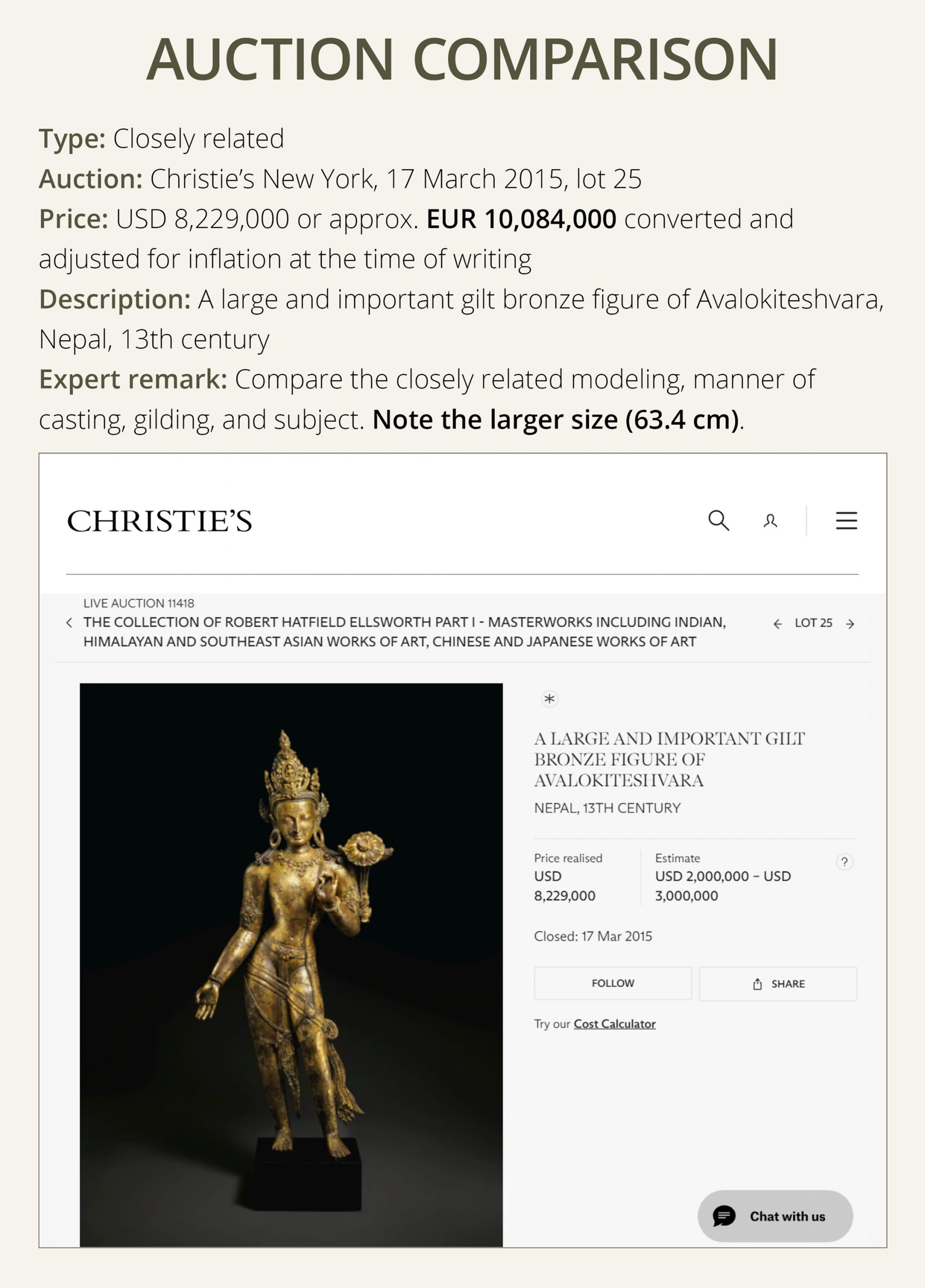
Type: Closely related
Auction: Christie’s New York, 17 March 2015, lot 25
Price: USD 8,229,000 or approx. EUR 10,084,000 converted and adjusted for inflation at the time of writing
Description: A large and important gilt bronze figure of Avalokiteshvara, Nepal, 13th century
Expert remark: Compare the closely related modeling, manner of casting, gilding, and subject. Note the larger size (63.4 cm).
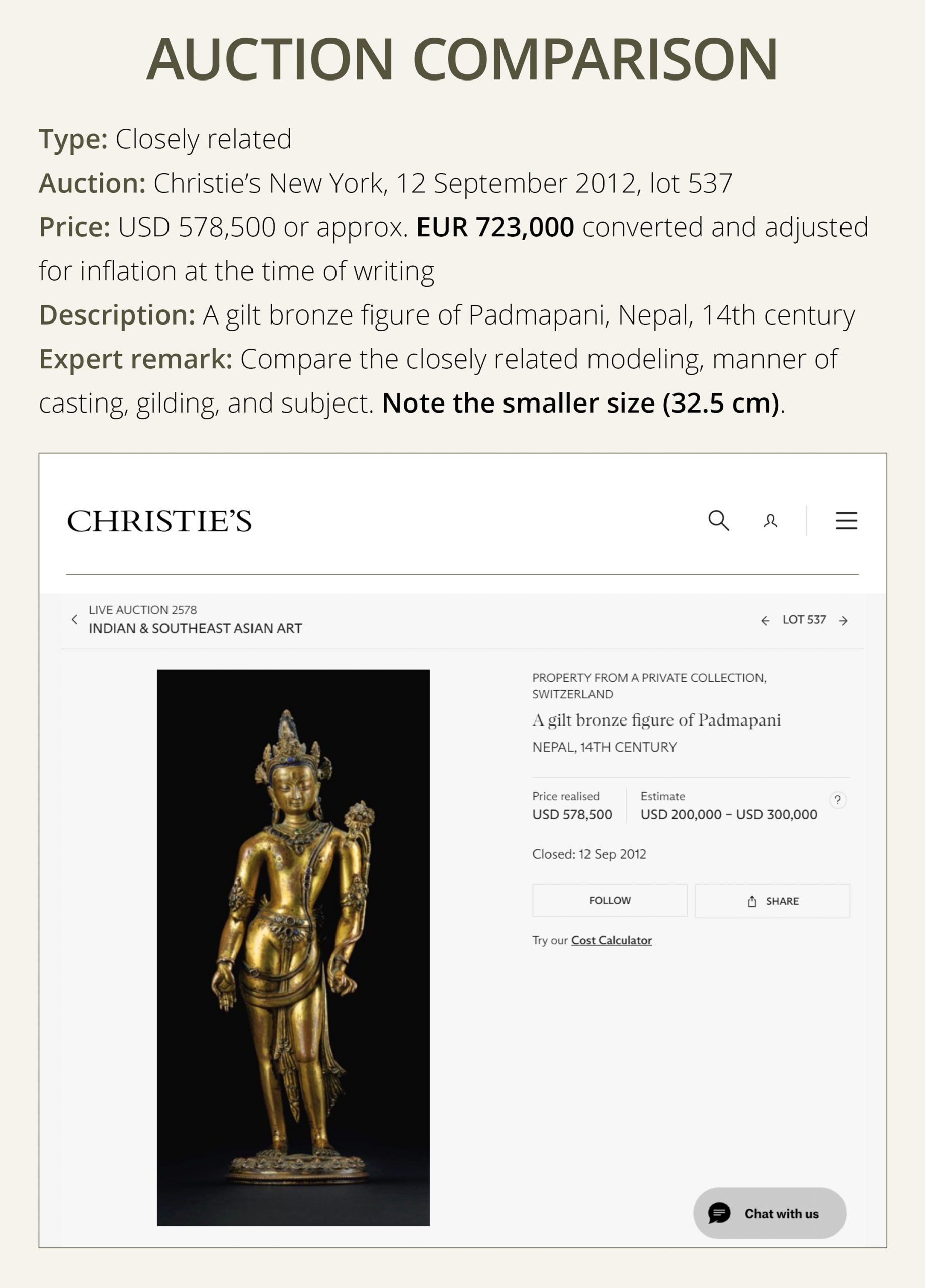
Auction result comparison:
Type: Closely related
Auction: Christie’s New York, 12 September 2012, lot 537
Price: USD 578,500 or approx. EUR 723,000 converted and adjusted for inflation at the time of writing
Description: A gilt bronze figure of Padmapani, Nepal, 14th century
Expert remark: Compare the closely related modeling, manner of casting, gilding, and subject. Note the smaller size (32.5 cm).
Details
- Title : A VERY LARGE (50.5 CM) AND IMPORTANT GILT-BRONZE AND CRYSTAL-INLAID FIGURE OF PADMAPANI LOKESHVARA
- Year : EARLY MALLA PERIOD, 13TH-14TH CENTURY
- Classification : Sculpture
- Medium : GILT-BRONZE AND CRYSTAL-INLAID
- Dimension : Weight: 6.6 kg (excl. base), 9 kg (incl. base). Dimensions: Height 50.5 cm (excl. base and tang), 53 cm (excl. base, incl. tang), 55.5 cm (incl. stand)
- Accession No : Lot 27
- Collection : Zacke
- Acquisition Method : Actioned - TWO-DAY AUCTION: Fine Asian Art, Buddhism and Hinduism, 15th Oct, 2026
- Status : Starting price €120,000Estimate €240,000 I 15th Oct, 2026 11:00