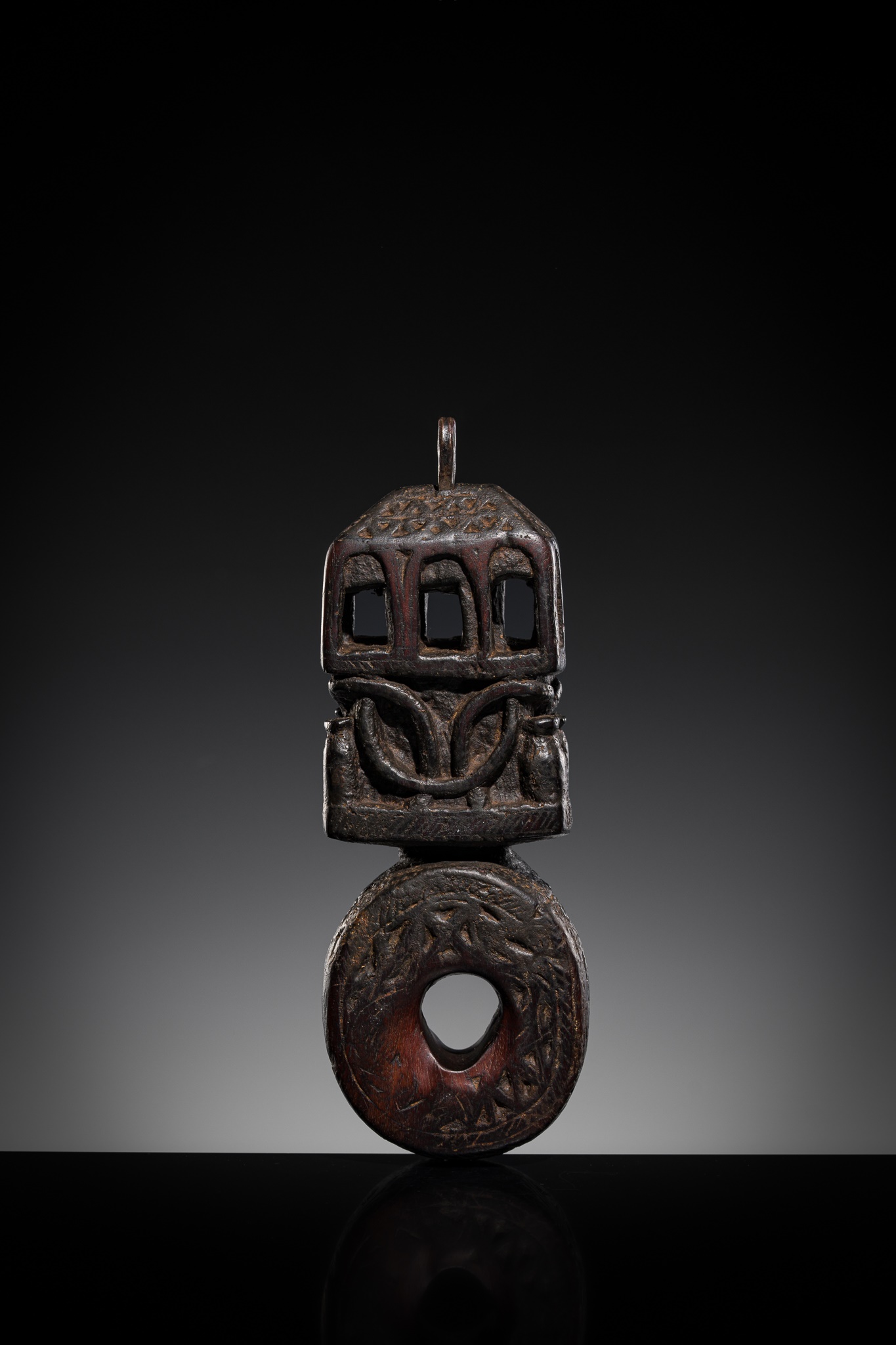
Provenance: The collection of Kristen Tomassi and Axel Dieter Ball, Mallorca, Spain, assembled since the 1980s. Kristen Tomassi, an architect and designer based in Mallorca, was married early in her life to Richard Branson, who was already rising to prominence with Virgin Records. Her enduring partnership was with German entrepreneur and architect Axel Dieter Ball (1942-2026), with whom she co-founded La Residencia in Deià in 1984. The hotel, a family-run haven celebrating art and music, helped shape the luxury hotel scene of Mallorca, where the couple spent most of their lives together until Axel sadly passed away this year. Together, they built an impressive collection of Himalayan art throughout the 1980s and 1990s, purchasing pieces from renowned dealers and auction houses including Rossi & Rossi, David Tremayne, Annapurna, Sotheby’s, and Christie’s. Objects formerly in their collection have been exhibited by the Museum of Asian Art, Hong Kong, and the Art Institute of Chicago, featuring also in the exhibition catalog by Pratapaditya Pal et al., Himalayas – An Aesthetic Adventure (2003).
Condition: Good condition with expected wear, traces of use, signs of weathering, smoothened chips, rubbing. The wood with a rich, naturally grown, dark patina.
Weight: 553 g
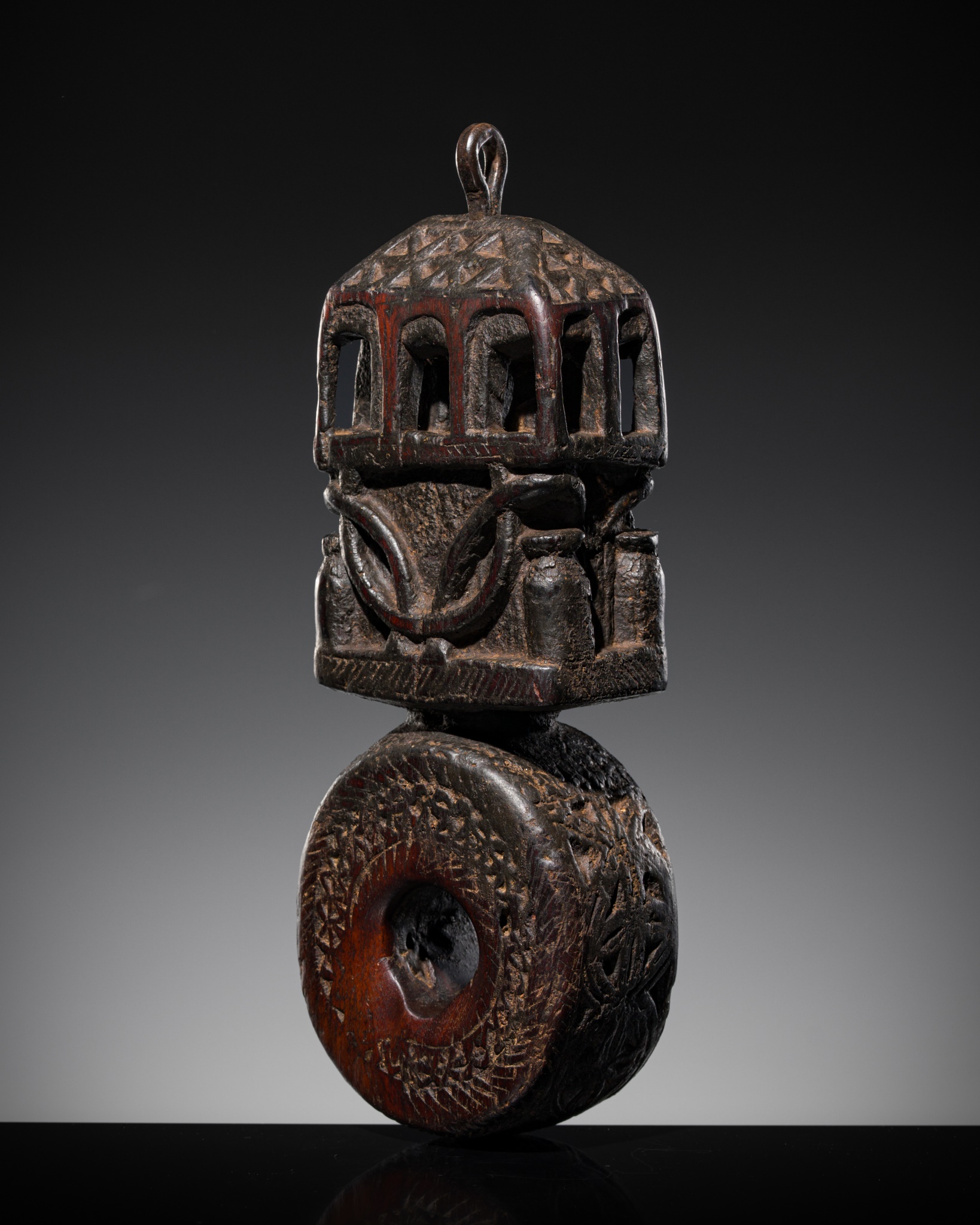
Dimensions: Height 26 cm
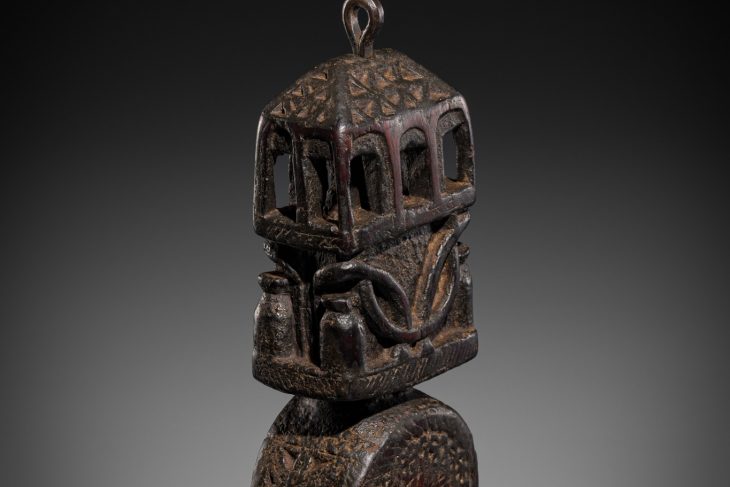
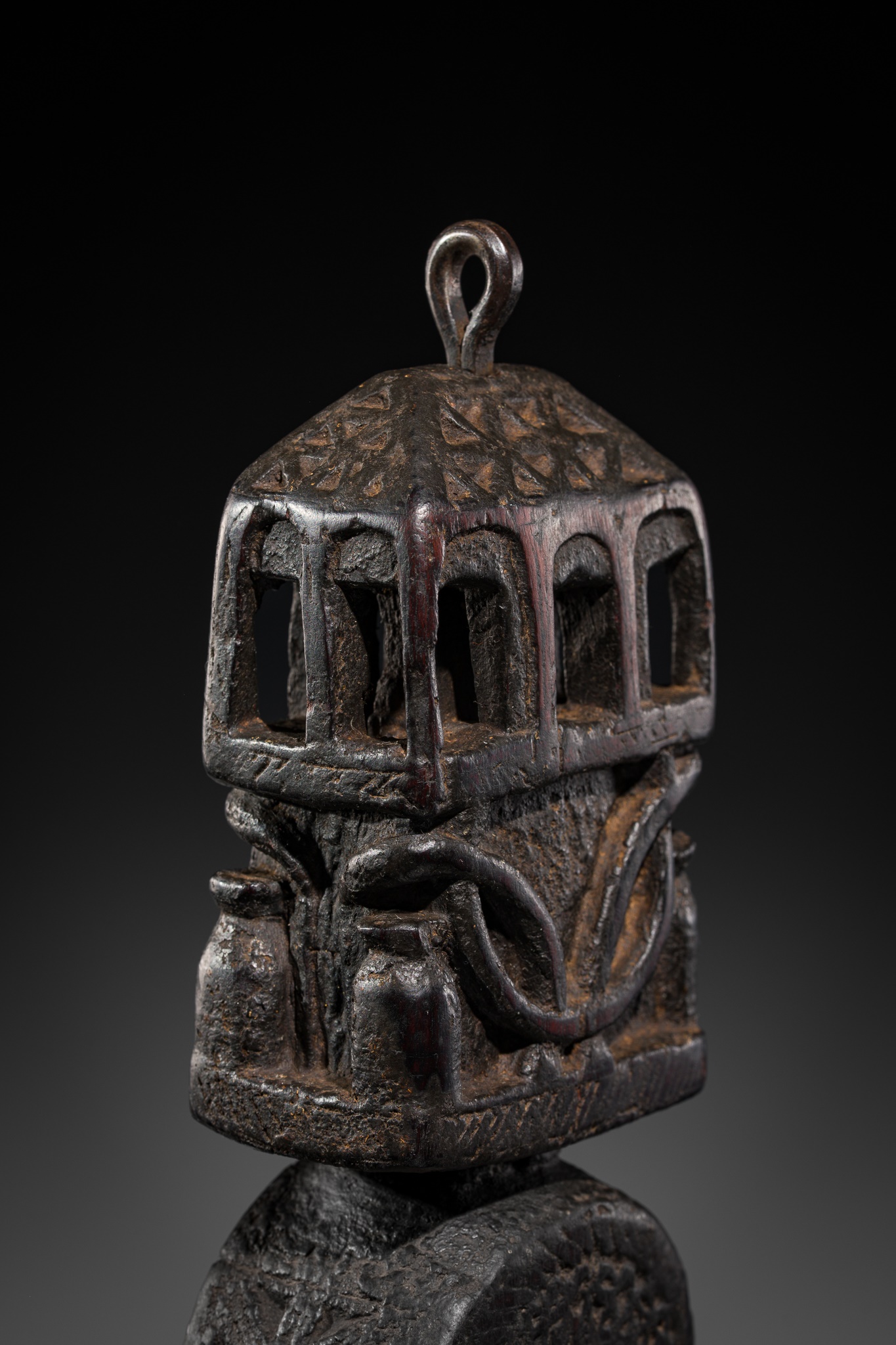
Wooden ghurra are traditional carved object from Nepal, primarily used by Himalayan herders as a churn stopper in the process of making butter or ghee. These objects are both functional and symbolic and are notable for their intricate wood carvings. The churning sticks are made of wood and have a long, slender shape with a tapered end that fits into a wooden bowl. The churning stick is placed in the bowl and moved back and forth to separate the cream from the milk and make butter.
Wooden churning sticks have been an important part of daily life in Nepal for centuries and are still widely used, especially in rural areas where modern technology is less common. Using a wooden churning stick is not only practical but also has spiritual significance in Nepalese culture. It is considered a ritual and meditative process that emphasizes the purity and vitality of the milk.
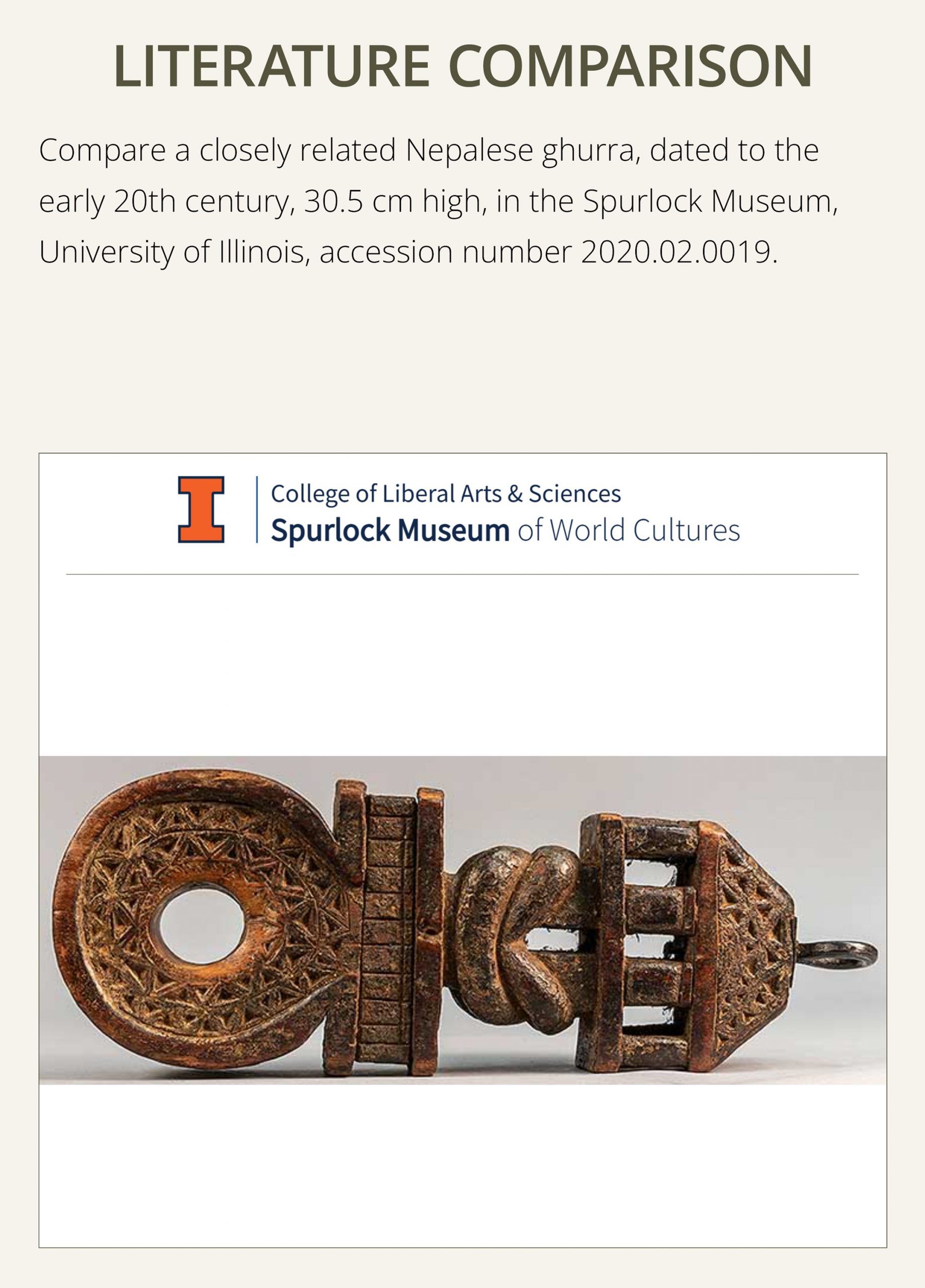
Literature comparison:
Compare a closely related Nepalese ghurra, dated to the early 20th century, 30.5 cm high, in the Spurlock Museum, University of Illinois, accession number 2020.02.0019.
Details
- Title : A WOOD BUTTER CHURNING ROD HOLDER, GHURRA
- Year : 19TH-EARLY 20TH CENTURY
- Classification : Tribal Art
- Medium : Wood
- Dimension : Weight: 553 g, Dimensions: Height 26 cm
- Accession No : Lot 31 - HS0626
- Collection : Zacke
- Status : Auctioned for €650.00